

Best Compact Recovery Equipment for Apartments in 2026
Table of Contents
- Why Your Apartment Needs Compact Recovery Equipment
- 5 Compact Recovery Tools That Fit a Small Apartment
- Portable Red Light Therapy Devices for Targeted Relief
- Inflatable Cold Plunge Tubs for Apartments: Do They Work?
- How to Store Recovery Equipment in Small Spaces
- Common Mistakes to Avoid With Compact Recovery Gear
- Build Your Apartment Recovery Routine
- Final Verdict: Best Compact Recovery Equipment
- Frequently Asked Questions
Last Updated: September 6, 2026
Why Your Apartment Needs Compact Recovery Equipment
Compact recovery equipment is gear designed to speed up muscle recovery, improve mobility, and reduce soreness while taking up minimal floor space when stored or in use. If you train hard in a small living space, you already know the struggle: the living room doubles as a gym, and there is no spare closet for a full-size plunge or a permanent massage table. This guide from Freedom Fit Fuel breaks down the best compact recovery equipment for apartments, focusing on tools that store flat, fold away, or roll up between sessions.

The biggest mistake most apartment dwellers make is buying full-size recovery gear first, then realizing it dominates the room. A dedicated wellness corner is a luxury most renters do not have. Instead, the smart approach is to prioritize tools that earn their square footage through versatility and portability. Below, we will show you exactly how to build a recovery setup that fits in a corner, under a bed, or behind a door, without sacrificing the results you need after tough workouts.
5 Compact Recovery Tools That Fit a Small Apartment
The best compact recovery equipment for apartment living falls into five categories: red light therapy panels, foldable cold plunge tubs, sauna blankets, walking pads, and folding strength gear. Each solves a specific recovery problem, and each can be stored flat or folded when not in use.

We evaluated every piece of gear against a strict space-saving test. The criteria are simple: Does it fold, roll, or stack? Does it require permanent installation? Can it be moved by one person in under two minutes? If a tool fails those three questions, it does not belong in an apartment.
The Space-Saving Test: Our Evaluation Criteria
The evaluation criteria focus on footprint, setup time, noise, and versatility. A tool that scores high on all four is worth your limited square footage.
| Tool Type | Stored Footprint | Setup Time | Noise Level | Best For |
|---|---|---|---|---|
| Red light panel | Shelf or wall mount | Instant | Silent | Targeted muscle relief |
| Foldable plunge tub | Flat, 6-8 inches tall | 10 minutes | Low | Cold water therapy |
| Sauna blanket | Rolls up small | 2 minutes | Silent | Whole-body heat therapy |
| Walking pad | Under bed or sofa | Instant | Low hum | Active recovery cardio |
| Folding squat rack | Flat against wall | 5 minutes | Impact noise | Strength training |
Portable Red Light Therapy Devices for Targeted Relief
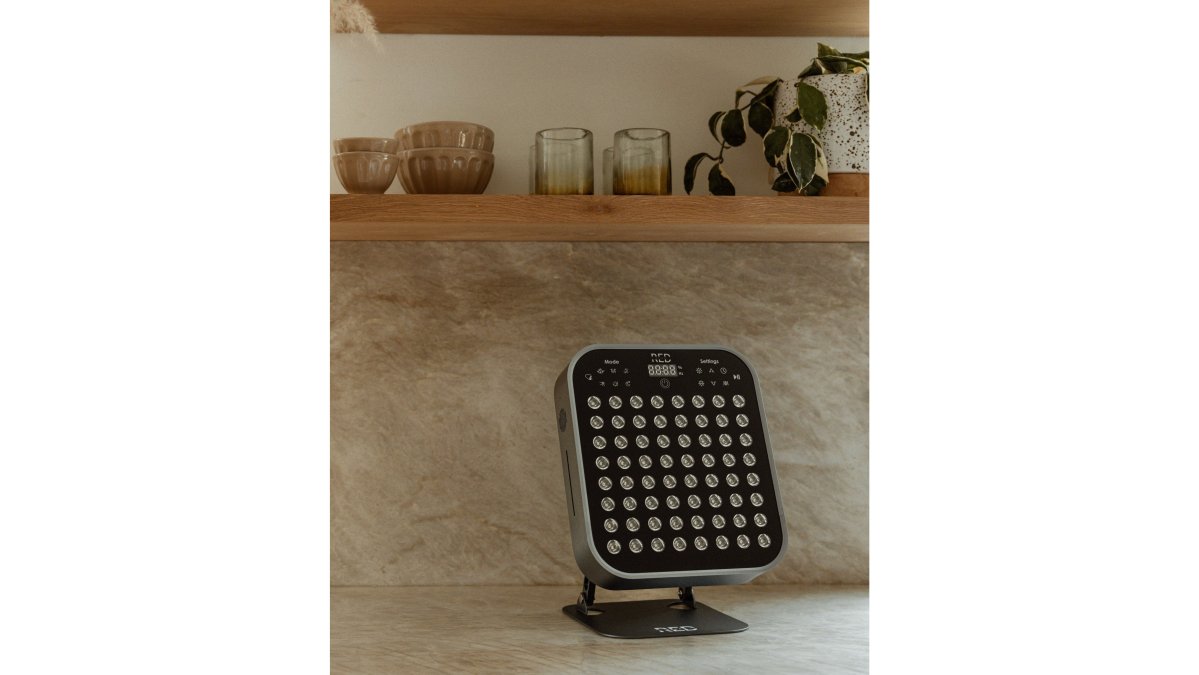
Portable red light therapy devices are the single most versatile compact recovery equipment option for apartment residents. These panels deliver light wavelengths that penetrate tissue to support muscle recovery and reduce tension, all from a device that fits on a bookshelf or mounts to a wall. The Small Panel from Freedom Fit Fuel is a great starting point for anyone new to red light therapy, delivering a full-strength session in a footprint small enough to move easily around the house.
For even tighter spaces, The Wrap is a cordless red light therapy device priced at $179.00 that straps directly to knees, shoulders, back, or arms. No outlet, no setup, no scheduling around it. You just wrap, press, and go about your routine. This is the kind of targeted relief that makes sense when you do not have room for a full-size panel stand. The freedom to use it on the couch or while working removes the friction that kills most recovery habits.
Inflatable Cold Plunge Tubs for Apartments: Do They Work?
Inflatable cold plunge tubs for apartments do work, provided you choose a model designed to fold flat and you have a plan for water drainage. A permanent, hard-shell plunge is not realistic for most renters. An inflatable or foldable version solves that problem by packing down to a few inches of height when empty.
The Portable Foldable Plunge Tub is set up without permanent installation and folds flat for storage between uses, making it one of the most practical compact recovery equipment choices for cold therapy. At $499.99, it gives you the option of hot or cold water therapy without committing your floor plan. The Ice Bath Tub takes a different approach with a 6-layer insulated design that holds water temperature for about 60 minutes, so you do not need a chiller running constantly (peer-reviewed research).

How to Store Recovery Equipment in Small Spaces
How to store recovery equipment in small spaces comes down to one principle: assign every tool a home before you buy it. If you cannot name the exact spot where a piece of gear will live, you will end up tripping over it within a week.
Vertical Storage Solutions for Recovery Gear
Vertical storage is the undisputed winner for apartments. Wall-mounted racks hold foam rollers, massage guns, and resistance bands off the floor entirely. A simple pegboard above a desk or near the entryway can organize an entire recovery kit. Folding squat racks, like the Synergee 2200 Series, mount directly to the wall and fold flat when not in use, reclaiming the floor for daily life while keeping your strength training intact.
Noise-Dampening Recovery Protocols for Shared Walls
Noise-dampening recovery protocols are essential when you share walls with neighbors. Use a thick exercise mat under any floor-based equipment, especially walking pads and folding racks. The DeerRun Z20 walking pad is designed with a low-noise motor, which helps, but the mat does the heavy lifting for impact absorption (osha.gov). Schedule percussive therapy and vibration work during daytime hours, and keep cold plunge chillers on a rubber pad to prevent vibration transfer through the floor.
Common Mistakes to Avoid With Compact Recovery Gear
The most common mistake with compact recovery gear is prioritizing price over storage compatibility. A cheap, bulky massage chair might save money upfront, but it will cost you in living space every single day. Another frequent error is ignoring the noise profile of motorized equipment. A loud percussive therapy device or a rattling treadmill will not just annoy you; it will create tension with neighbors.
A third mistake is buying tools that duplicate each other. If you already own a red light panel, a red light wrap that covers the same body parts may be redundant. The goal of compact recovery equipment is not to own everything; it is to own the fewest pieces that cover your most common recovery needs.
Build Your Apartment Recovery Routine
Most guides stop at listing gear. This section is different: it shows you how to run a full recovery session in a 4x4-foot patch of floor, using the compact tools already covered. The goal is a routine that takes 15 minutes, requires zero setup beyond unrolling a mat, and leaves no trace when you are done.
The 15-Minute, 4x4-Foot Recovery Session
Clear a space roughly the size of a yoga mat. You do not need a dedicated room, just a spot where you can lie down and stretch your arms overhead without hitting furniture. Here is the sequence we recommend, built around tools that store flat or roll up:
Minutes 0-3: Blood Flow and Mobility (Standing)
Start with a resistance band looped around a sturdy table leg or door anchor. Do 10 slow, controlled leg swings forward and backward, then 10 side-to-side, holding the band for light tension. This wakes up the hips and lower back without requiring any floor space. If you have a walking pad, skip this and do a 3-minute walk at 2 mph instead.
Minutes 3-8: Self-Myofascial Release (Floor)
Roll out a high-density foam roller or place a massage ball under your upper back. Lie down with your knees bent, feet flat, and gently roll from your mid-back to your shoulder blades for 90 seconds. Then, move the ball to your glutes and sit on it, using your hands behind you for support, for another 90 seconds. This is where a compact roller like the TriggerPoint Grid (13 inches long) shines because it fits in a backpack and does not dominate a closet.
Minutes 8-12: Targeted Relief (Seated or Lying)
Switch to your percussive massager or a manual massage stick. If you are using a massage gun, keep the pressure light and move slowly over the quads and calves for 60 seconds per muscle group. If you prefer manual tools, a curved massage stick lets you reach your own back without contorting. The key is to avoid spending more than 2 minutes on any single area, which keeps the session efficient and prevents overstimulation.
Minutes 12-15: Cool Down and Reset (Standing or Seated)
Finish with 10 deep diaphragmatic breaths while standing with your hands on your hips. Roll your shoulders backward 10 times. Then, fold your gear: roll the mat, hang the bands on a hook, and slide the massager into a drawer. The entire setup should be out of sight in under 60 seconds.
The "One-Tool" Micro-Routine for Busy Days
Not every day allows for a full 15-minute block. On those days, use a single tool that delivers the most value per square foot: a lacrosse ball or a small massage ball. Here is a 5-minute routine that requires only the ball and a wall:
- Calf release (90 seconds): Stand facing a wall, place the ball behind your ankle, and bend the knee to press into the wall. Roll slowly up and down.
- Upper back release (90 seconds): Stand with your back to the wall, place the ball between your shoulder blade and spine, and do shallow squats to roll it.
- Foot release (60 seconds): Stand on the ball with one foot, applying moderate pressure, and roll from heel to ball of foot.
- Reset (60 seconds): Shake out each leg and arm, then take 5 slow breaths.
This routine works because it uses gravity and the wall as the anchor, eliminating the need for any additional equipment or floor space.
Why Routine Beats Gear Count
A common pattern among apartment dwellers is buying multiple tools but using none consistently because each requires separate setup. The fix is to build a routine around one primary tool and one secondary tool. For most people, that means a foam roller or massage ball as the primary, and a resistance band as the secondary. Red light panels, sauna blankets, and plunge tubs are enhancements, not necessities, for daily recovery. They earn their place only if you actually use them weekly.
By structuring your session around time and space constraints, you turn recovery from a chore into a habit. The tools are secondary to the system. Start with the 15-minute routine above, adjust the order to target your specific sore spots, and you will find that a 4x4-foot patch of floor is all the room you need.
Final Verdict: Best Compact Recovery Equipment
The best compact recovery equipment for an apartment prioritizes foldable, portable, and multi-functional designs over permanent installations. For most people, the ideal starter kit combines a red light therapy device for targeted relief, a sauna blanket for whole-body sessions, and a walking pad for active recovery. Add a foldable plunge tub only if you have a waterproof floor area and a storage plan.
At Freedom Fit Fuel, we stock the full range of compact recovery gear, from The Wrap at $179.00 to the Portable Foldable Plunge Tub at $499.99, with real inventory and direct pricing on every category. We are a newer brand, and we are honest about that, but our founder Craig is a U.S. Air Force veteran who believes in practical, no-hype solutions that actually fit your life. If you are unsure which compact recovery equipment fits your space, call our expert support team and we will help you measure, plan, and choose the right setup for your apartment.
Living in a small space does not mean giving up serious recovery. The challenge is choosing gear that respects your square footage while still delivering the muscle relief, mobility work, and relaxation your body needs. Freedom Fit Fuel offers thoughtful, curated recovery essentials designed for home use, with free shipping on most orders and secure payment processing, so you can build a wellness corner that fits your life. Get started with Freedom Fit Fuel and find the compact recovery equipment that turns your apartment into a recovery retreat.
Frequently Asked Questions
What is the best compact exercise machine for an apartment?
For recovery specifically, compact equipment like a portable red light therapy device or a foldable massage mat offers the most benefit per square foot. If you want cardio too, a foldable walking pad treadmill like the DeerRun Z20 stores flat under a bed or sofa. The best choice depends on whether you prioritize muscle recovery, mobility work, or active recovery.
Can you fit an infrared sauna in a small apartment?
Yes. A 3-zone infrared sauna blanket provides the core benefits of infrared heat without the footprint of a sauna room. It rolls up and stores in a closet. For a more targeted option, a compact red light therapy panel delivers similar cellular benefits for muscle recovery in a device that sits on a shelf or desk.
How do I store recovery equipment in small spaces?
Use vertical space. Install wall hooks for foam rollers and massage guns. Store foldable items like plunge tubs and sauna blankets flat under a bed or behind a door. Choose equipment that rolls up or folds flat. A small rolling cart can hold massage balls, resistance bands, and other accessories in a closet or corner.
What recovery tools are essential for home use?
Start with a foam roller for myofascial release and a massage ball set for trigger point work. Add a portable red light therapy device for deep tissue recovery and an inflatable cold plunge tub if you have space for occasional cold therapy sessions. These tools cover the essentials without requiring a dedicated recovery room.