

Contrast Therapy at Home: Guide for the Bold and Cold
Most people view a forty-degree plunge as a form of medieval penance, but what if your shivering was actually the key to unlocking a calmer, sharper, and more resilient version of yourself? Learning how to do contrast therapy at home doesn't require a PhD in cryogenics or a backyard the size of a stadium. You've likely felt the sting of boutique wellness center prices or the headache of decoding conflicting advice on temperature. Stop overthinking the ice. It's a genuine struggle to find that perfect balance between high-end recovery and the practical, space-limited realities of your own home.
We understand that you want to feel empowered, restored, and entirely in control of your recovery. This guide promises to strip away the confusion by providing professional protocols and slightly irreverent advice on the gear that actually matters. We will explore how to use tools like the Barcelona 1-2 Person Low EMF FAR Infrared Home Sauna or a dedicated cold plunge to reduce muscle soreness and build grit. From precise timing to space-saving tips, you're about to turn your daily routine into a repeatable, intentional, and transformative ritual that doesn't require a $100 membership fee.
Key Takeaways
- Discover the "Nordic Cycle," a strategic method of alternating temperatures that acts as a rhythmic, strengthening, and restorative workout for your vascular system.
- Understand the biological "squeeze" that flushes out muscle soreness while spiking the chemicals that make you feel alert, alive, and slightly invincible.
- Learn how to do contrast therapy at home using professional-grade tools like the Barcelona 1-2 Person Low EMF FAR Infrared Home Sauna, avoiding the participation trophy that is your standard bathtub.
- Master the "Golden Ratio" protocol to balance your time between heat and cold, ensuring your ritual is safe, effective, and repeatable.
- Explore how to stack your recovery by pairing thermal sessions with PEMF mats to ground, recharge, and renew your cells for a complete wellness experience.
The Method to the Madness: What is Contrast Therapy?
Contrast therapy is the intentional "pumping" of the circulatory system through temperature extremes. Often called the "Nordic Cycle," this practice involves the strategic alternating between extreme heat and cold immersion to shock the body back into a state of vibrant balance. It isn't just about testing your mettle or seeing how long you can suppress a scream in an ice bath. Instead, it is a calculated, physiological power cycle designed to trigger systemic restoration. When you master how to do contrast therapy at home, you aren't just following a trend; you're adopting a ritual that makes you feel clearer, stronger, and more centered.
Think of it as a high-intensity interval workout for your blood vessels. You're forcing your vascular system to dance on command. This process, technically known as Contrast bath therapy, utilizes thermal stress to move blood in ways that passive rest simply cannot match. It’s an active way to reclaim your vitality and ensure your recovery is intentional, restorative, and effective.
The Vasodilation and Vasoconstriction Dance
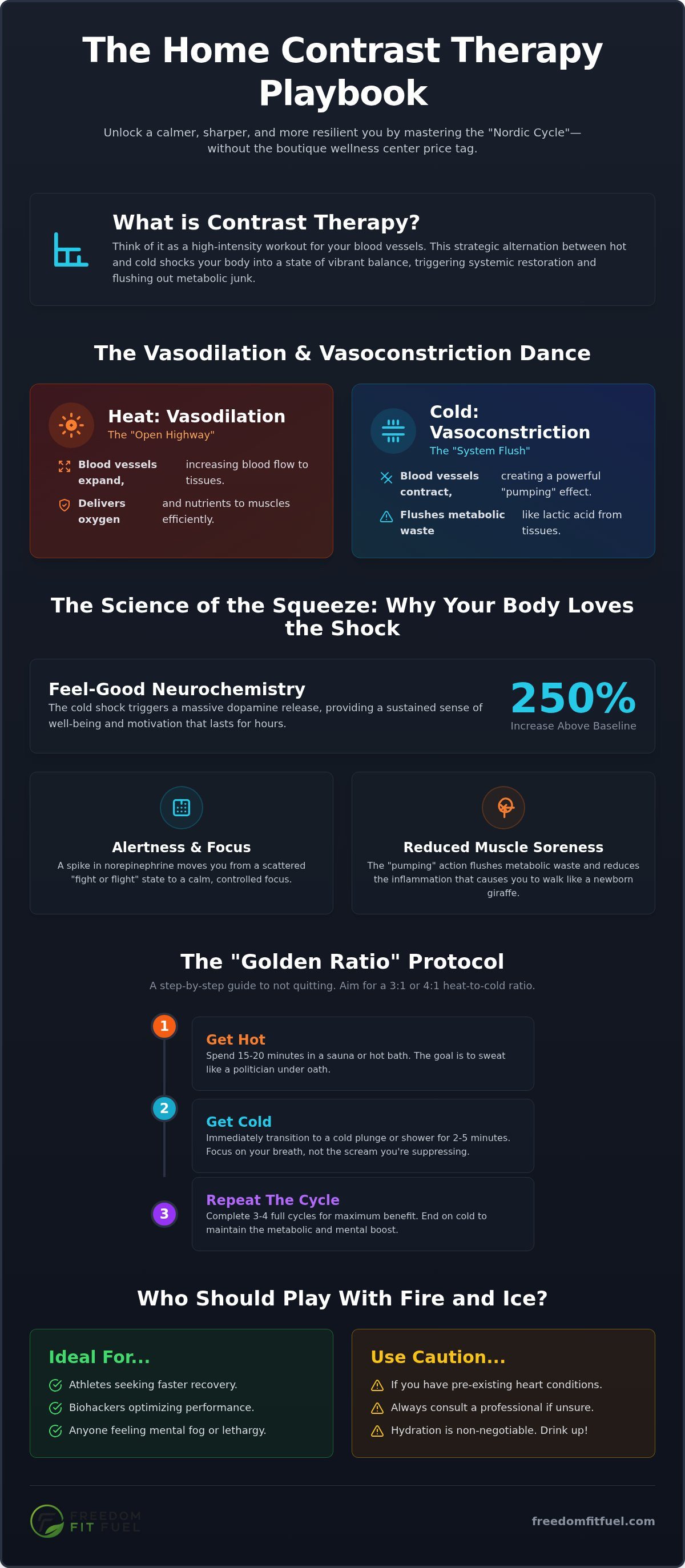
The magic happens in the rapid shift between temperatures. Heat causes vasodilation, where your blood vessels expand like a highway opening up extra lanes during rush hour. Cold then triggers vasoconstriction, causing those same vessels to snap shut. This alternating cycle creates a powerful "pumping effect" that flushes metabolic waste from muscle tissue and floods your system with fresh, oxygenated blood. It’s far more effective than just sitting on the couch with a bag of frozen peas. While the peas might numb a small area, a full contrast cycle recruits your entire circulatory system to heal, renew, and invigorate your body from the inside out.
Who Should (and Shouldn’t) Play with Fire and Ice
This ritual is ideal for athletes, dedicated biohackers, and anyone who feels like a parched human raisin after a long week. It helps you shake off the mental fog and physical lethargy that accumulate in a modern, sedentary life. However, safety is the foundation of any good practice. If you have heart conditions or just generally "bad vibes" about extreme cold, you should definitely consult a professional before diving in. Also, remember that hydration is non-negotiable. If you plan on sweating like a politician under oath in a sauna, you need to prep your body with plenty of water. Learning how to do contrast therapy at home is about empowerment, but it only works if you listen to what your body is actually saying.
The Science of the Squeeze: Why Your Body Loves the Shock
You've likely experienced that specific brand of misery known as Delayed Onset Muscle Soreness (DOMS). It's the primary reason you might walk like a newborn giraffe the day after a heavy squat session. Learning how to do contrast therapy at home provides a biological shortcut to relief by stimulating your nervous system in ways a simple foam roller never could. By alternating temperatures, you're essentially giving your internal systems a much-needed reset.
The cold shock isn't just a sensory assault; it’s a chemical catalyst. When you plunge into freezing water, your body spikes norepinephrine. This neurotransmitter makes you feel alert, focused, and slightly invincible. It essentially flips a switch in your brain, moving you from a scattered state of "Fight or Flight" into a controlled "Rest and Digest" mode. While your blood is moving, cold shock proteins act as a dedicated cellular cleanup crew, actively repairing damaged proteins and ensuring your internal machinery stays efficient. This surge of dopamine can be up to 250% above baseline, providing a sustained sense of well-being that rivals many pharmacological interventions.
According to the Contrast Hydrotherapy resources at the Global Wellness Institute, this method is a cornerstone of modern recovery for its ability to stimulate circulation and promote holistic healing. It is a practice rooted in both ancient tradition and modern physiological data.
Flushing the System: Lactic Acid and Lymphatics
Think of the thermal cycle as a manual pump for your lymphatic system. Unlike your heart, the lymphatic system doesn't have its own pump; it relies on external movement and pressure. The rapid shift between heat and cold forces these vessels to contract and expand, flushing out metabolic waste and reducing that "heavy leg" feeling after intense endurance training. This synergy is particularly effective for chronic joint stiffness, offering a level of restoration that feels both deep and immediate. It moves fluid out of stagnant areas, allowing your body to heal itself with fresh, nutrient-rich blood.
The Mental Edge: Building Resilience
Choosing to be cold is a form of voluntary hardship. When you intentionally step into the freeze, you're training your mind to stay calm under pressure. This builds a unique kind of mental resilience that makes your daily workplace stressors feel like a gentle breeze. In the world of biohacking, "The Suck" is actually the point. It’s where the growth happens. If you’re ready to start your journey, exploring premium recovery tools can help you build a sanctuary that makes this productive hardship feel like a high-end ritual.
Building Your Home Sanctuary: Equipment That Doesn’t Involve a Garden Hose
If you've ever tried to submerge yourself in a standard porcelain bathtub while clutching a bag of melting gas-station ice, you know that the DIY struggle is real. Using a cramped tub is the participation trophy of recovery; it’s uncomfortable, inefficient, and remarkably difficult to manage. Mastering how to do contrast therapy at home requires a more intentional approach than just turning your shower handle to "hot" and hoping for the best. A hot shower barely grazes the surface of your skin, whereas a dedicated heat source creates the deep, systemic sweat needed to prime your vascular system for the cold.
The gold standard for the heat phase is a 2-Person Low EMF FAR Infrared Sauna. Unlike traditional steam rooms that just make the air heavy, infrared technology works by heating your body directly. This ensures you reach the necessary core temperature without feeling like you're drowning in a humid cloud. When setting up your space, think about the flow of your ritual. You want your heat and cold sources close enough for a seamless transition, but positioned to avoid turning your floor into a literal swamp. Use absorbent mats and consider the path you'll take while dripping wet; a few seconds of planning prevents a slippery disaster and keeps your focus on restoration rather than cleaning.
The Infrared Advantage
FAR infrared waves penetrate deeper than surface-level steam, reaching into muscle tissue to trigger the vasodilation we discussed earlier. It is vital to prioritize Low EMF (Electromagnetic Field) technology; you don't want to trade your muscle recovery for unnecessary radiation exposure. For those with space-starved sanctuaries, the Barcelona 1-2 Person Low EMF FAR Infrared Home Sauna offers a compact, premium solution that fits into most floor plans without sacrificing the intensity of the experience. It provides a dry, manageable heat that feels supportive rather than suffocating.
Cold Plunge vs. Ice Bath
The "bag of ice in a bin" method is a logistical nightmare that usually ends with you shivering in a lukewarm puddle. Dedicated cold plunge tubs eliminate the need for 40lb ice runs, maintaining a consistent temperature between 45°F and 55°F. If you have the outdoor space, the Wood Fired 4-Person to 5-Person 0-Jet Hot Tub and Ice Bath represents the ultimate "fire and ice" setup. Consistency is the key to repeatable results, and having a temperature-controlled environment ensures you spend your time thriving rather than just surviving the setup. This level of intentionality is what separates a hobbyist from someone who truly understands how to do contrast therapy at home.
The Master Protocol: A Step-by-Step Guide to Not Quitting
The Golden Ratio is your north star: aim for three to four minutes of heat for every one minute of cold. This isn't a random number pulled from a hat; it's the physiological sweet spot for maximizing vascular movement without prematurely ending your session. Always start with heat to get the blood flowing and end with cold to seal the deal and close those pores. For those just beginning to learn how to do contrast therapy at home, a 20-minute ritual is the perfect starting point. It offers enough stress to be effective without feeling like a survival exercise. A great starting temperature for a beginner’s first cold plunge is approximately 55°F. It's cold enough to trigger a response, but it won't make you feel like you’re starring in a disaster movie.
Step 1: The Pre-Heat
Begin by spending 10 to 15 minutes in your infrared sauna. You want to reach a state where you're sweating like a marathon runner in July. Use this time for deep, intentional breathing to prep your nervous system for the coming shift. Our team at Freedom Fit Fuel believes in intentional wellness, where you treat your body as a sanctuary rather than a machine. This heat phase isn't just about the sweat; it's about finding a moment of quiet before the storm.
Step 2: The Plunge
When the timer dings, transition quickly. Don’t think; just sink. Submerge yourself up to the neck to ensure maximum vagus nerve activation. This is the part where your brain will try to negotiate with you, but stay firm for one to three minutes. If you start reciting the alphabet backward just to maintain focus, it's likely time to step out. Control your breath with slow, steady exhales. Your breath is your best friend when the water is trying to convince you to panic.
Step 3: The Repeat and Rest
Repeat this entire cycle three times. Think of it as a high-intensity interval workout for your soul. After the final cold immersion, resist the urge to jump into a steaming shower immediately. Instead, air dry or use a light towel-off. Let your body regain its natural temperature slowly. This gradual return to baseline allows your circulatory system to finish its work naturally. If you're ready to upgrade your recovery and master how to do contrast therapy at home, explore our full collection of saunas and plunges to bring this professional ritual into your own home.
Elevating the Ritual: Beyond the Basics with Freedom Fit Fuel
Once you've mastered the fundamental "Nordic Cycle," you might start feeling like a recovery god. But why stop at "good enough" when you can achieve the ultimate recovery synergy? Learning how to do contrast therapy at home is a powerful entry point, but the most resilient versions of ourselves are built by stacking intentional tools. While the thermal shock of your sauna and plunge does the heavy lifting, adding biohacking elements like pulsed electromagnetic fields or red light can finish the job that temperature started. It’s about moving from a simple habit to a sophisticated, professional-grade sanctuary.
The Freedom Fit Fuel philosophy centers on providing equipment that respects your body and your space. We don't believe in cutting corners, especially when it involves your recovery. This is why we prioritize Low EMF technology across our range. Many competitors focus solely on the "vibration" or the "heat," completely ignoring the invisible electromagnetic fields that can disrupt your cells. When you invest in a mindful home sanctuary, you deserve tools that promote restoration without adding unnecessary environmental stress to your system.
The Synergy of PEMF and Red Light
After your final cold plunge, your body is in a state of high alertness. This is the perfect moment to ground your cells using a PEMF mat. While the thermal cycle flushes your system, the magnetic fields help recharge your cellular batteries at a molecular level. You can further target specific inflammation points by integrating the Ultra Series Red & Near-Infrared LED Therapy Panel into your post-session routine. These light wavelengths penetrate deep into the tissue, supporting mitochondrial health and skin renewal. Creating a "Recovery Circuit" in a spare bedroom or garage turns a quick session into a comprehensive restorative experience.
Designing for Intention
Your environment dictates the quality of your ritual. Elegance, authenticity, and high-quality materials aren't just aesthetic choices; they're cues to your nervous system that it’s time to heal. For those who value social recovery, the Wood Fired 4-Person to 5-Person 0-Jet Hot Tub and Ice Bath acts as a stunning centerpiece for outdoor rituals. It allows you to share the "suck" of the cold and the relief of the heat with friends or family. Ultimately, you aren't just buying gear or learning how to do contrast therapy at home. You are carefully selecting a path toward a more resilient, balanced, and confident version of yourself. Every intentional choice you make in your home sanctuary is an investment in your long-term vitality.
Step Into Your Strongest Self
Mastering how to do contrast therapy at home is more than a physical recovery tactic; it's a commitment to your mental and physiological resilience. By alternating the deep, penetrative heat of a Low EMF FAR infrared sauna with the sharp, clarifying chill of a cold plunge, you're training your system to thrive under pressure. You now understand that the "Golden Ratio" and professional-grade equipment are the keys to moving beyond the participation trophy of a standard bathtub struggle.
As specialists in Low EMF technology, we provide the curated tools you need to build a mindful home sanctuary. With national US shipping on all professional-grade recovery gear, your personal transformation is closer than you think. Find your perfect "Fire and Ice" setup at Freedom Fit Fuel and start your journey toward recovery today. You have the protocol, the science, and the gear. Now, it's time to embrace the shock, find your balance, and start thriving.
Frequently Asked Questions
Is contrast therapy better than just an ice bath?
Contrast therapy is generally superior for circulation because it utilizes the "pumping" action of vasodilation and vasoconstriction. While an ice bath is excellent for numbing and managing acute inflammation, the heat-cold cycle actively moves blood through the system. It’s the difference between a static soak and a full vascular workout. If you want to flush metabolic waste rather than just freeze your nerves, the cycle is definitely king.
How many times a week should I do contrast therapy at home?
Most practitioners find that two to four sessions per week provide the best balance of recovery and resilience. Doing it daily is perfectly fine if your body handles the stress well, but consistency matters more than frequency. When you are first learning how to do contrast therapy at home, start with twice a week. This allows your nervous system to adapt without feeling like you've signed up for an unplanned arctic expedition.
Can I do contrast therapy in my shower?
You can, but a shower is essentially the "diet" version of the real thing. While alternating hot and cold water provides some benefit, it lacks the full-body hydrostatic pressure of a plunge and the deep core heating of a sauna. It’s certainly better than doing nothing, but you’ll miss out on the systemic "squeeze" that professional-grade equipment provides. Think of it as a gateway drug to a proper home sanctuary.
What is the best temperature for an at-home cold plunge?
Aim for a range between 45°F and 55°F for the most effective results. Beginners should start at the higher end of that scale to avoid immediate panic. The goal isn't to turn into a human popsicle; it's to trigger a hormonal and vascular response. If you can maintain your breath and avoid the urge to recite your last will and testament, you’ve found the right temperature for your journey.
Should I do contrast therapy before or after a workout?
Post-workout is generally the preferred time for contrast therapy to aid in recovery and reduce muscle soreness. However, avoid immediate cold immersion after a hypertrophy session, as it can blunt the inflammatory response needed for muscle growth. Wait at least four hours if you're chasing gains. If you're just looking to feel alert, a morning session works wonders. Knowing how to do contrast therapy at home gives you the flexibility to time it perfectly.
Is infrared better than a traditional sauna for contrast therapy?
Infrared is often more effective for home use because it heats your core directly rather than just warming the air. Units like the Barcelona 1-2 Person Low EMF FAR Infrared Home Sauna provide a deeper sweat at lower ambient temperatures. This makes the transition to cold feel much more impactful. Plus, you don't have to deal with the humidity and heavy air that traditional steam saunas produce in small, enclosed spaces.
What should I wear during a contrast therapy session?
Minimal clothing is best to ensure maximum skin contact with both the infrared waves and the cold water. Most people opt for a simple swimsuit or breathable athletic gear. Avoid heavy fabrics that hold onto water, as they’ll make the transition between the sauna and the plunge feel like you're wearing a cold, soggy carpet. Comfort and ease of movement should be your guiding principles during your recovery ritual.
How long does it take to see results from contrast therapy?
You’ll feel the mental clarity and the dopamine high almost immediately after your very first session. For physical benefits like reduced muscle soreness and improved circulation, most users report a noticeable difference after three to five consistent sessions. It’s a cumulative ritual. The more you practice your routine, the more your body learns to regulate its nervous system and recover with professional-grade efficiency and grace.