

Infrared Sauna Alternatives for Recovery
Table of Contents
- Why Infrared Sauna Alternatives Matter for Recovery
- FAR Infrared vs. Full-Spectrum: Which Recovery Option Works Better
- Benefits of Contrast Therapy for Athletes
- How Long to Stay in an Infrared Sauna for Recovery
- Portable Sauna vs. Stationary Sauna for Recovery
- Key Features That Separate Recovery Saunas Worth the Investment
- Long-Term Maintenance Costs and Energy Efficiency
- Conclusion
- Frequently Asked Questions
Last Updated: September 2, 2026
Why Infrared Sauna Alternatives Matter for Recovery
Athletes and fitness enthusiasts constantly chase ways to recover faster. Whether you're dealing with muscle soreness after a hard workout or chronic joint pain, the pressure to optimize recovery is real. This is where infrared sauna alternatives for recovery become relevant, but not all recovery tools work the same way, and not every setup fits every home or budget.
The recovery landscape has shifted dramatically. Ten years ago, if you wanted serious thermal therapy, you bought a traditional sauna or did nothing. Today, you have options: full-spectrum infrared saunas, FAR infrared units, contrast therapy setups combining heat and cold, portable pods, and even targeted red light therapy. Each approach delivers different benefits, costs different amounts, and requires different space and electrical infrastructure.

At Freedom Fit Fuel, we help people navigate this choice by focusing on what actually works for home-based recovery. The goal isn't to sell you the most expensive option, it's to match you with the tool that fits your recovery goals, your space, and your budget. Before you invest in any recovery equipment, you need to understand what you're actually buying and whether it solves your specific problem.
FAR Infrared vs. Full-Spectrum: Which Recovery Option Works Better
FAR (far-infrared) wavelengths penetrate deeper into tissue than full-spectrum options, making them the preferred choice for most home recovery setups. Full-spectrum infrared includes near, mid, and far wavelengths all at once, while FAR isolates the longest wavelengths that travel deepest into muscle and joint tissue.
The practical difference matters. FAR infrared wavelengths have a longer penetration depth, which means they reach deeper muscle tissue and joints with less surface heat (peer-reviewed research). This is why athletes recovering from tendonitis or deep muscle soreness often prefer FAR units. Full-spectrum saunas deliver a broader therapeutic effect across all tissue layers, which some users find more balanced for general wellness and circulation.

FAR infrared saunas typically run cooler (around 120-135°F) while still delivering intense therapeutic heat to deep tissue. Full-spectrum units often run hotter (up to 160°F or more) because they're heating surface and deeper layers simultaneously. If you have heat sensitivity or joint inflammation, the cooler FAR option may feel more comfortable while still delivering results.
From a practical standpoint, FAR infrared also tends to have lower electromagnetic field (EMF) levels when built with carbon heaters instead of ceramic ones. The Barcelona FAR Infrared Home Sauna from Freedom Fit Fuel, for example, uses 6 low-EMF carbon heating panels rated at 5-10 mg measured 2-3 inches from the panel, which addresses a common concern among health-conscious users worried about EMF exposure during recovery sessions.
Benefits of Contrast Therapy for Athletes
Contrast therapy, alternating between heat and cold, accelerates recovery by triggering vasodilation (blood vessel expansion) and vasoconstriction (blood vessel narrowing) in rapid cycles (peer-reviewed research). This pumping action flushes metabolic waste from muscles and increases nutrient-rich blood flow to damaged tissue.
The mechanism is straightforward: heat opens blood vessels and increases circulation to the affected area. Cold closes them down and reduces inflammation. By alternating between the two, you create a circulatory pump that works harder than either therapy alone. Athletes doing contrast therapy report faster recovery times, reduced muscle soreness, and improved performance in subsequent training sessions compared to heat or cold therapy in isolation.
A typical contrast therapy protocol involves 3-5 minutes in heat (sauna at 135-150°F) followed by 1-3 minutes in cold (cold plunge at 50-60°F), repeated 3-5 times. Some athletes add a final cold exposure to reduce inflammation before leaving the recovery space. The exact timing depends on your fitness level and what you're recovering from, beginners should start with shorter exposures and work up.
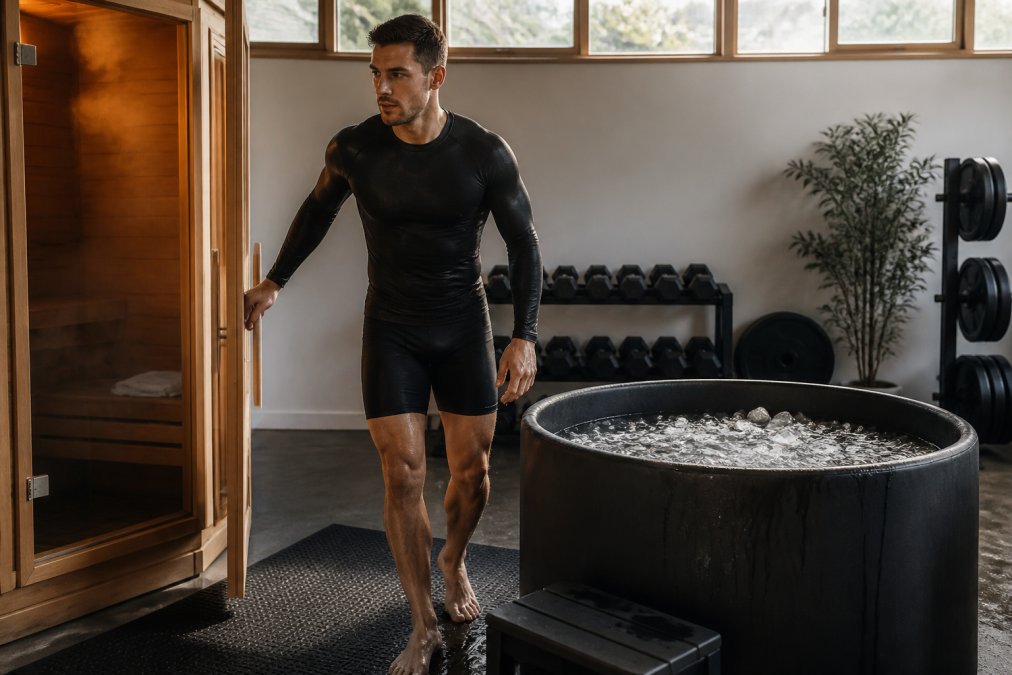
The real advantage of contrast therapy for home use is that you control the variables. Commercial recovery centers charge per session. At home, once you have both a sauna and cold plunge setup, you can do contrast therapy daily if your training demands it. This consistency compounds results over weeks and months.

How Long to Stay in an Infrared Sauna for Recovery
The optimal time to stay in an infrared sauna for recovery is 20-30 minutes per session, which allows deep tissue penetration without overheating or dehydration. This window is long enough for thermal therapy to reach muscles and joints, but short enough to avoid the diminishing returns and safety risks of extended exposure.
Most people feel the full benefits of infrared therapy between 15-20 minutes. If you're new to sauna use, start at 15 minutes and work up. Your body adapts to heat over time, and pushing too hard in early sessions leads to dizziness, nausea, or overheating, which defeats the purpose of recovery.
The pre-heating time matters too. Most home infrared saunas take 30-45 minutes to reach therapeutic temperature. The Barcelona FAR Infrared Home Sauna reaches full temperature in roughly 40 minutes, so factor that into your recovery schedule. Some athletes warm up while the sauna heats, then start their session once the ambient temperature stabilizes.
Frequency depends on your training intensity. If you're doing heavy strength training or high-impact work, daily sauna sessions can accelerate recovery. If you're doing light activity, 2-3 times per week is sufficient. Listen to your body, if you feel fatigued or overheated, skip a session or reduce duration.
Portable Sauna vs. Stationary Sauna for Recovery
Portable saunas offer flexibility and lower upfront cost. Stationary saunas deliver better heat retention, durability, and a more consistent therapeutic experience. The choice depends on your space, budget, and how seriously you're committing to recovery.
Portable saunas (typically dome or tent-style units) cost less, fold away when not in use, and require minimal installation. You can set one up in a bedroom, living room, or garage without permanent modifications. The downside: they heat less evenly, retain heat poorly, and often feel cramped. If you're 6 feet or taller, many portable units won't accommodate you comfortably.
Stationary saunas are built into a fixed footprint. They're made from solid wood (hemlock, cedar, or redwood), have better insulation, maintain consistent temperature, and last longer. The Extendable Infrared Sauna for Home from Freedom Fit Fuel splits the difference, it's built from solid hemlock wood but has an extendable frame that slides to save up to 5 square feet of floor space when not in use. You get the durability and performance of a stationary unit with some of the space-saving benefit of portable options.
For serious athletes doing daily recovery work, a stationary sauna is the better investment. The consistent heat, better insulation, and durability justify the higher cost over a 5-10 year timeline. For casual users or people testing whether sauna therapy actually works for them, a portable unit makes sense as a lower-risk entry point.
| Factor | Portable Sauna | Stationary Sauna |
|---|---|---|
| Initial Cost | $500-$1,500 | $1,500-$3,500+ |
| Space Required | 3-5 sq ft (collapsible) | 15-25 sq ft (permanent) |
| Heat Retention | Poor (fabric/plastic) | Excellent (solid wood) |
| Temperature Consistency | Uneven | Consistent |
| Durability | 2-4 years | 8-15+ years |
| Installation | None (plug and play) | Requires outlet access, assembly |
| Best For | Testing, travel, small spaces | Serious daily recovery use |
Key Features That Separate Recovery Saunas Worth the Investment
Not all infrared saunas are built the same. The difference between a $1,500 unit and a $3,500 unit comes down to heating technology, materials, EMF levels, temperature control, and build quality. Understanding these features prevents you from overpaying for marketing hype or undershooting on performance.
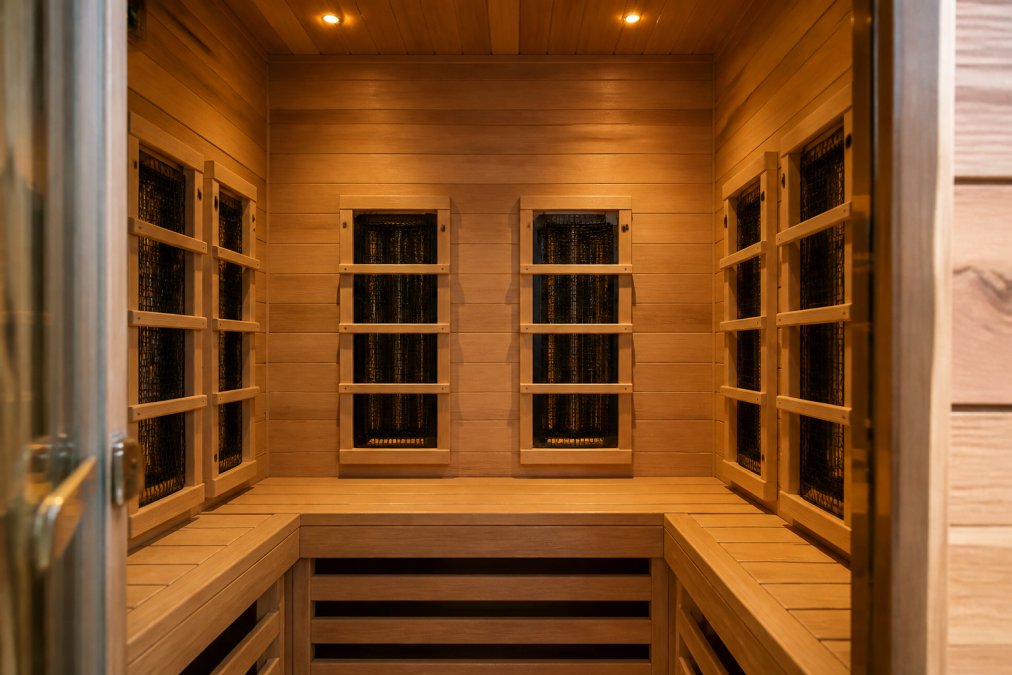
Heating panels matter most. Carbon heaters are superior to ceramic heaters for home recovery. Carbon heaters distribute heat more evenly, have lower EMF output, and heat up faster. The 2-Person Low EMF FAR Infrared Sauna from Freedom Fit Fuel uses 6 low-EMF carbon heating panels rated between 5-10 mg measured 2-3 inches from the panel, this is the specification that separates a sauna designed for serious recovery from one designed for casual use.
Wood quality affects durability and aesthetic. Canadian hemlock is the standard for quality home saunas. It's rot-resistant, doesn't off-gas, and ages well. Cedar is softer and more prone to warping. Avoid saunas made from treated or pressure-treated wood, which can leach chemicals when heated.
EMF levels should be under 10 mg at 2-3 inches from the panel. This is the measurement distance that matters for practical use, it's roughly where your body sits during a session. Higher EMF levels are associated with potential health concerns, and many users specifically choose low-EMF units for peace of mind during daily recovery work.
Temperature range and control. A good recovery sauna should run from at least 100°F to 135°F, with digital controls that let you set exact temperatures. The Personal Home Infrared Full Spectrum Sauna from Freedom Fit Fuel heats up in roughly 40 minutes and runs on a standard 120V outlet, making it practical for most homes. Smart controls with Bluetooth speakers are nice-to-haves but not essential, focus on consistent temperature first.
Voltage requirements. Most home saunas run on standard 120V, 15-amp circuits. Some larger units require 240V. Check your home's electrical capacity before buying. A standard outlet can handle the Barcelona FAR Infrared Home Sauna, but if you're adding a cold plunge or multiple recovery devices, you may need to upgrade your electrical panel.
Long-Term Maintenance Costs and Energy Efficiency
Sauna ownership involves ongoing costs that many buyers underestimate. Electricity, maintenance, repairs, and eventual replacement all add up. Understanding these costs prevents buyer's remorse and helps you budget for true cost of ownership.
Electricity is the largest ongoing cost. A typical home infrared sauna uses 1,500-2,000 watts per session. At the U.S. average electricity rate of roughly 15 cents per kilowatt-hour, a 30-minute daily session costs about $2.25-$3.00 per day, or $70-$90 per month (eia.gov). If you use the sauna 5 days a week instead of daily, cut that roughly in half. Over a year, expect $500-$1,100 in electricity costs for regular use.
Maintenance is minimal but essential. Wipe down the interior with a damp cloth after each use to prevent mold and mildew. Check for loose wood or hardware annually. Replace the door seal if it stops sealing properly (usually after 5-7 years). These maintenance tasks are DIY-level and cost very little.
Major repairs (heating panel failure, electrical issues) are where costs spike. A replacement heating panel runs $200-$500. Electrical repairs can cost $300-$800 depending on the issue. This is why build quality matters, cheap saunas fail sooner and cost more to repair.
Energy efficiency varies by design. Saunas with better insulation (thicker wood, sealed seams, quality door gaskets) retain heat longer and use less electricity to maintain temperature. The Extendable Infrared Sauna for Home uses solid hemlock construction and insulation efficiency that reduces heating time and power consumption compared to thin-walled portable units.
Conclusion
Choosing an infrared sauna alternative for recovery comes down to matching the right tool to your specific situation. FAR infrared saunas deliver superior deep-tissue penetration for muscle and joint recovery. Contrast therapy accelerates results by combining heat and cold. Stationary saunas outperform portable units for serious athletes doing daily recovery work.
The equipment you choose should fit your home, your budget, and your training demands. If you're serious about recovery and have the space, a quality stationary sauna like the Barcelona FAR Infrared Home Sauna or the 2-Person Low EMF FAR Infrared Sauna from Freedom Fit Fuel delivers consistent results over years of use. Both units feature low-EMF carbon heating panels, Canadian hemlock construction, and smart controls, the features that actually matter for therapeutic recovery.
Building a home recovery space doesn't require a six-figure setup. Start with one solid tool, use it consistently, and add complementary equipment (like a cold plunge for contrast therapy) as your recovery practice evolves. Freedom Fit Fuel carries the equipment you need at transparent pricing with expert support available by phone. We're new to the market, which means we're focused on getting your setup right the first time, not just moving inventory. Get started with a sauna that matches your recovery goals and your space.
Frequently Asked Questions
What is a good replacement for a sauna if I don't have space for a full-sized unit?
Portable infrared saunas and compact models like the Extendable Infrared Sauna for Home save up to 5 square feet of floor space when not in use. Full-spectrum alternatives such as the Medical 3 fit spaces as small as 39 x 36 inches. For athletes with severe space constraints, contrast therapy combining brief cold exposure with heat (using portable sauna blankets or cold plunges) delivers similar recovery benefits without requiring permanent installation.
How long should I stay in an infrared sauna for recovery benefits?
Most recovery protocols recommend 20-45 minutes at 120-135°F for optimal results. Beginners should start at 15-20 minutes to allow the body to acclimate to infrared wavelengths. For muscle recovery and circulation improvement, 30 minutes is the sweet spot, long enough for deep tissue penetration and vasodilation without excessive fluid loss. Always listen to your body and stay hydrated.
What makes contrast therapy effective for athletes compared to sauna alone?
Contrast therapy alternates between heat and cold exposure, triggering vasodilation (blood vessel expansion) during sauna sessions followed by vasoconstriction during cold plunges. This cycle accelerates blood flow, reduces inflammation, and clears metabolic waste more efficiently than sauna use alone. Athletes report faster recovery from high-intensity training and reduced delayed-onset muscle soreness (DOMS) when combining infrared sauna sessions with cold exposure protocols.
Is a portable sauna as effective as a stationary infrared sauna for recovery?
Portable saunas deliver infrared wavelengths and heat therapy but typically reach lower temperatures (100-130°F) and have shorter session capacity than stationary units. Stationary models like the Barcelona FAR Infrared Home Sauna reach 135°F with consistent heat distribution across six carbon heaters, enabling deeper tissue penetration. For serious athletes prioritizing recovery speed and cardiovascular benefits, stationary saunas are more effective, but portable options work well for maintenance recovery and space-limited homes.