

Recovery for Athletes: Cold Plunge vs. High-Tech Tools
Table of Contents
- Why Recovery for Athletes Is Now a Competitive Edge
- Recovery for Athletes vs. Competitors: The Tool Landscape
- Red Light Therapy vs Cold Plunge for Recovery: The Main Event
- Benefits of Contrast Therapy for Athletes and Muscle Repair
- How Long Should Contrast Therapy Last for Best Results
- Budget-Friendly vs. High-Tech Recovery Gear: What to Buy First
- Building Your Home Recovery Plan: Tools and Timing
- Conclusion: Your Recovery Strategy Starts Now
- Frequently Asked Questions
Last Updated: September 4, 2026
Why Recovery for Athletes Is Now a Competitive Edge
For decades, training harder was the only answer. That mindset has flipped: the athletes who win now are the ones who recover the smartest.
Recovery is the physiological process where your body rebuilds muscle fiber repair, replenishes glycogen stores, and clears metabolic waste. Skip it, and you invite central nervous system fatigue, a suppressed immune response, and eventually overtraining syndrome. This guide from Freedom Fit Fuel compares the tools that claim to speed up adaptation and helps you decide where to spend your money without falling for hype.
Recovery for Athletes vs. Competitors: The Tool Landscape
The recovery market has split into two camps: the "low-tech" traditionalists and the "high-tech" biohackers. Both share a common goal, accelerating physiological adaptation and boosting injury resilience, but differ in cost, convenience, and the specific stress signals they send to your body.
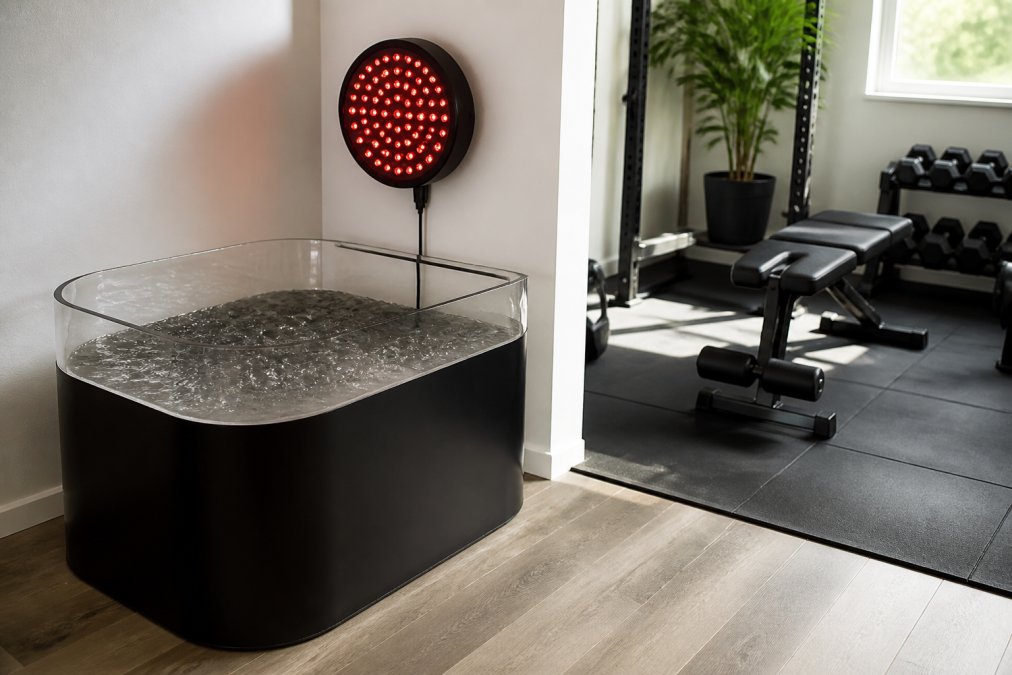
Cold Plunge and Ice Baths
Cold water immersion is the most accessible entry point into serious recovery work. Cold exposure constricts blood vessels, reduces inflammation, and numbs nerve endings to dull delayed onset muscle soreness. When you step out, blood flow increases dramatically, flushing out metabolic waste.
The barrier to entry has dropped considerably. You can start with a simple inflatable Ice Bath Tub for Home Cold Plunge Therapy priced at $559.99, which holds temperature for about 60 minutes. For a permanent setup, the RevX Acrylic X Tub Cold Plunge with a LUX chiller costs $7,500 and keeps water at a precise 34°F without needing ice. The choice depends entirely on how often you plan to use it and whether you value convenience over setup time.
Red Light Therapy Panels
Red light therapy sits on the opposite end of the spectrum. Instead of stress, it delivers targeted wavelengths of light that penetrate tissue to stimulate cellular energy production, supporting muscle fiber repair and reducing inflammation without the shock of cold water. It is the tool you can use while reading or watching television.
The catch is intensity. Home panels vary wildly in power output, and many consumer devices do not deliver the clinical joules per centimeter squared that research suggests are necessary. Look for verified irradiance measurements and treatment area coverage, not just LED count.
Contrast Therapy (Sauna + Plunge)
Contrast therapy alternates between heat and cold to create a vascular pump effect. The heat dilates blood vessels and increases circulation; the cold constricts them and reduces inflammation. This alternating signal forces the body to adapt to rapid temperature shifts, which can improve session quality and training frequency.
The MedEq Wood/Stainless Steel Plunge Pool with Integrated Chiller/Heater is designed specifically for this, allowing you to switch between 37°F cold plunges and 108°F heated soaks in the same unit. This is the premium end of the market, priced at $9,550, but it eliminates the need for separate sauna and plunge installations.
Red Light Therapy vs Cold Plunge for Recovery: The Main Event
If you can only buy one tool, the choice between red light therapy vs cold plunge comes down to your training schedule and tolerance for discomfort. Cold plunges are best used immediately after high-intensity sessions to blunt inflammation and manage acute soreness. Red light therapy is a daily driver that supports long-term cellular health and tissue repair without interfering with the natural inflammatory response that triggers adaptation.

What the Research Says
The scientific literature on both modalities is strong but nuanced. Cold water immersion consistently reduces perceived soreness and accelerates short-term recovery between sessions (PubMed). However, some research suggests that using cold immediately after strength training may blunt hypertrophy because it dampens the inflammatory signaling that tells muscles to grow (PubMed).
Red light therapy, by contrast, does not appear to interfere with muscle growth. It works by stimulating mitochondrial function, increasing ATP production and speeding up repair of damaged tissue. This makes red light a safer daily tool, while cold plunges are best reserved for specific phases or after competition.
Time Commitment and Convenience
A proper cold plunge session requires mental preparation, a 2-5 minute immersion, and a warm-up period, 20-30 minutes of your morning committed to the process. A red light therapy session is passive: you sit or stand in front of the panel for 10-15 minutes while doing something else.
| Factor | Cold Plunge | Red Light Therapy |
|---|---|---|
| Session Length | 2-5 minutes in water | 10-15 minutes passive |
| Total Time Cost | 20-30 minutes | 10-15 minutes |
| Best Timing | Post-exercise, acute soreness | Daily, any time |
| Discomfort Level | High | None |
| Primary Benefit | Inflammation reduction | Cellular repair |
| Entry Price | $559.99 | Varies by panel |
Benefits of Contrast Therapy for Athletes and Muscle Repair
The benefits of contrast therapy for athletes extend beyond simple soreness relief. The heat phase (typically 100°F-110°F) triggers vasodilation, increasing blood flow to working muscles and enhancing delivery of oxygen and nutrients. The cold phase (50°F-59°F) causes vasoconstriction, limiting accumulation of inflammatory cytokines. The rapid shift also stimulates the sympathetic nervous system, leading to a post-session release of norepinephrine, which can improve alertness and reduce perceived fatigue.
This alternating stressor is not necessarily superior to a single modality for all outcomes. A 2015 meta-analysis in the Journal of Strength and Conditioning Research found contrast therapy was no more effective than cold water immersion alone for reducing delayed onset muscle soreness (DOMS) in the 72 hours following exercise (PubMed). However, athletes often report it feels more tolerable than a standalone cold plunge, which may improve adherence.
The unique benefit of contrast therapy lies in its dual action on the cardiovascular and autonomic nervous systems. The heat phase promotes a parasympathetic shift, critical for the 'rest and digest' state that facilitates tissue repair and sleep quality. The cold phase, performed at the end, provides a sympathetic 'kick' that leaves you feeling invigorated rather than lethargic, making it a superior post-workout choice when you still have to function for the rest of the day.
For muscle repair, timing is key. Heat applied within the first few hours after a workout can increase blood flow but may prolong the inflammatory phase if used too aggressively. Cold is best reserved for the acute phase (first 2-4 hours) to blunt excessive swelling. Contrast therapy allows you to manage both phases in a single session, but requires a deliberate protocol to avoid overstimulating the stress response.
A common pattern is to use contrast therapy on lower-body training days or after endurance sessions, where vascular demand is high. For upper-body strength work, a simple sauna session or localized heat pack may suffice. Treat contrast therapy as a tool for systemic recovery and nervous system regulation, not as a replacement for targeted interventions like massage or compression.
The psychological restoration component is often underestimated. The heat phase promotes relaxation and activates the parasympathetic nervous system, critical for sleep quality and stress management. Many athletes report the contrast protocol is the most mentally restorative part of their week, providing a forced break from screens.
Pair contrast sessions with proper protein intake. The increased blood flow from the heat phase helps deliver amino acids to damaged muscle fibers, while the cold phase reduces secondary damage from inflammation.
Contrast therapy is not a substitute for sleep. The most powerful recovery stimulus remains a full night of sleep, during which growth hormone is released and tissue remodeling occurs.
How Long Should Contrast Therapy Last for Best Results
The question of how long should contrast therapy last does not have a single answer, but research points to a clear protocol. The goal is to create a strong vascular response without exhausting your body's thermoregulatory systems.
A Simple Contrast Protocol
A standard session alternates between heat and cold. Start with 3-4 minutes in the sauna or heated plunge to raise your core temperature. Follow with 1-2 minutes in the cold plunge. Repeat this cycle 3-4 times, always ending on cold to reduce inflammation and leave you feeling alert.
Total session time should land between 15 and 25 minutes. Do not exceed 30 minutes, as the stress hormone response becomes counterproductive. Two to three sessions per week is sufficient for most athletes. On heavy training weeks, add a session; on deload weeks, cut back to one.
Budget-Friendly vs. High-Tech Recovery Gear: What to Buy First
Most people buy the most expensive tool first, use it for two weeks, and then let it collect dust. A smarter approach is to start with the tools that address your biggest recovery bottleneck.
If your issue is acute soreness after hard training sessions, a cold plunge is the more direct intervention. The Pro Elite Recovery inflatable ice bath at $559.99 is a low-commitment way to test whether you will actually use cold therapy before investing in a $7,500 acrylic system.
For those ready to commit, Freedom Fit Fuel carries the full range from portable tubs to the Acrylic Plunge Pool with Integrated Chiller/Heater at $6,250. That unit offers precise temperature control from 37°F to 108°F, making it the most versatile single piece of recovery equipment for a home gym.

Building Your Home Recovery Plan: Tools and Timing
A structured recovery plan is recovery periodization. Just as you periodize your training load, you should periodize your recovery interventions. This prevents your body from adapting to a single stimulus and ensures you use the right tool at the right time.
The missing piece in most guides is how to decide which tool to use on a given day. The answer lies in a simple two-step framework.
Step 1: Subjective vs. Objective Monitoring
You cannot manage what you do not measure. The most accessible objective metric is heart rate variability (HRV), which reflects your nervous system's readiness to perform. A consistently low HRV reading (compared to your baseline) suggests you are under-recovering and should shift focus to passive strategies like sleep and nutrition.
If you do not have a heart rate monitor, subjective monitoring works just as well. Track two numbers daily on a scale of 1-10: perceived soreness and energy levels. If your soreness is above a 6 or your energy is below a 4 for more than 48 hours after a session, your recovery protocol is not keeping pace with your training load.
Step 2: Match the Tool to the Training Block
Recovery should be periodized across your macrocycle (the full training year), mesocycle (4-6 week blocks), and microcycle (the training week):
- Macrocycle (Seasonal): During a base-building phase (high volume, lower intensity), prioritize red light therapy and massage to support tissue adaptation. During a peaking phase (high intensity, lower volume), prioritize cold plunges to manage the acute inflammation from heavy loading.
- Mesocycle (4-6 weeks): In the first two weeks of a new block, when your body is adapting to a new stimulus, use contrast therapy 2-3 times per week to manage systemic stress. In the final week before a deload, increase cold plunge frequency to 3-4 times per week to blunt soreness.
- Microcycle (Weekly): On high-intensity days (e.g., sprint intervals, heavy lifting), use a cold plunge within 2 hours post-session to manage inflammation. On moderate days, use red light therapy or a sauna in the evening to promote relaxation and sleep. On rest days, do nothing active, just walk, stretch, and prioritize sleep.
The 80/20 Rule of Recovery Tools
Here is a practical heuristic: 80% of your recovery gains come from sleep, nutrition, and stress management. The remaining 20% comes from the tools you buy. If you are sleeping less than 7 hours a night, eating poorly, or chronically stressed, a $9,500 plunge pool will not save you. Fix the fundamentals first.

For the 20% that tools can address, follow this decision tree:
- Acute soreness after a hard session? Use a cold plunge (2-5 minutes at 50°F-59°F) within 2 hours.
- Chronic tightness or poor sleep? Use a sauna or heat therapy in the evening (15-20 minutes at 170°F-190°F).
- Daily maintenance and cellular health? Use red light therapy (10-15 minutes per session, 3-5 times per week).
- Feeling flat and unmotivated? Skip the tools and go for a 20-minute walk or do light yoga. Active recovery is often more effective than passive modalities for mental fatigue.
Monitoring Your Recovery
Nutrition and hydration are the foundation of any recovery plan. Protein within the post-workout window supports muscle protein synthesis, while carbohydrates replenish glycogen.
The 30-Day Habit Test
Before investing in any high-ticket recovery equipment, commit to a 30-day habit test. Pick one modality, whether a $560 inflatable cold plunge or a $200 red light panel, and use it on a consistent schedule. If you miss more than 3 sessions in 30 days, the tool is not for you. If you stick with it, you have proven the habit and can justify the upgrade to a premium system.
Conclusion: Your Recovery Strategy Starts Now
The hardest part of recovery is not the science. It is the consistency. A $9,550 plunge pool that you use twice a year is a worse investment than a $560 tub you use every other day. Start with the tool that addresses your biggest bottleneck, build the habit, and track your results. Freedom Fit Fuel offers the full spectrum of recovery equipment, from the portable Pro Elite ice bath to the premium RevX Acrylic X Tub with integrated chiller. Our team is available by phone to help you match the right equipment to your space, budget, and training goals. Get started with Freedom Fit Fuel and take control of your recovery today.
Frequently Asked Questions
What is the best recovery method for athletes?
There is no single best method. Elite recovery combines sleep, nutrition, and active recovery with targeted tools like cold plunges or red light therapy. The right choice depends on your training load and goals. For immediate post-workout inflammation, a cold plunge is effective. For daily cellular repair and skin health, red light therapy offers consistent benefits. Most athletes benefit from a mix of both, scheduled strategically across their training week.
How does red light therapy compare to traditional ice baths?
They work through different mechanisms. Ice baths constrict blood vessels to reduce inflammation and numb pain, which can blunt muscle protein synthesis if used too soon after lifting. Red light therapy penetrates tissue to stimulate mitochondrial function and cellular repair without the cold shock. Red light therapy sessions are also more comfortable and easier to sustain daily, while cold plunges are best used strategically after intense sessions or on rest days.
How important is recovery for athletes in preventing injury?
Recovery is critical for injury resilience. Without proper recovery, training load outpaces your body's ability to adapt, leading to overtraining syndrome and increased injury risk. Consistent recovery practices allow for muscle fiber repair, glycogen replenishment, and central nervous system recovery. This adaptation is what makes you stronger. Skipping recovery does not just slow progress; it actively increases your chance of setbacks that can sideline you for weeks.
What is the 4-2-1 rule for athlete recovery?
The 4-2-1 rule is a simple framework for structuring recovery. It suggests consuming 4 grams of carbohydrates per 2 grams of protein within 1 hour post-exercise to optimize glycogen replenishment and muscle repair. This macronutrient timing window is crucial after intense sessions. While not a rule for tools like cold plunges, it highlights how nutrition is the foundation upon which other recovery modalities like sleep and compression therapy build.