

How to Track Inflammation Levels at Home: A 2026 Guide
Table of Contents
- Why Tracking Inflammation at Home Matters
- Signs of Chronic Inflammation You Shouldn't Ignore
- Understanding Key Inflammation Biomarkers: CRP and Beyond
- Best At-Home Inflammation Test Kits: What to Look For
- Using Wearables and Smart Devices to Monitor Inflammation
- How to Reduce Systemic Inflammation with Lifestyle Changes
- Common Tracking Mistakes and How to Avoid Them
- Conclusion: Building Your Personal Inflammation Baseline
- Frequently Asked Questions
Last Updated: September 5, 2026
Why Tracking Inflammation at Home Matters
Inflammation is your immune system's natural alarm system, but when that alarm never shuts off, it quietly damages tissues and organs over time. Chronic inflammation is the common thread linking many of today's most persistent health complaints, from joint stiffness to metabolic issues, and most people have no idea their levels are elevated until a blood test catches it years later. The ability to track inflammation levels at home has changed that picture, turning what used to require a doctor's visit into a simple finger-prick test or a wearable sensor readout. This guide from Freedom Fit Fuel breaks down the science of inflammation biomarkers, the best home testing options, and how to build a personal baseline you can actually act on.
Most guides on this topic are written by companies selling test kits, which creates an obvious bias toward product promotion over objective health education. Instead, we'll show you what the markers actually mean, where home testing falls short, and how to combine lab data with lifestyle changes for a complete picture. By the end, you'll know exactly how to track inflammation levels at home without wasting money on tests that don't answer your questions.
Signs of Chronic Inflammation You Shouldn't Ignore
Chronic inflammation doesn't announce itself with a fever or visible swelling the way acute inflammation does. It operates in the background, and its symptoms are easy to dismiss as normal aging or everyday stress. Common signs include persistent fatigue, unexplained joint or muscle pain, digestive issues, brain fog, and skin problems like eczema or acne that flare without an obvious trigger.
If you're waking up tired after a full night's sleep, or your recovery time after workouts keeps stretching longer, those are signals worth investigating. Many people only connect the dots when they see a lab result showing elevated markers, but by then the inflammatory process has often been running for months or years.
Understanding Key Inflammation Biomarkers: CRP and Beyond
Biomarkers are measurable biological indicators that tell you what's happening inside your body. For inflammation, the most clinically useful markers are proteins and compounds your liver and immune cells produce in response to inflammatory signals. Understanding what each marker represents helps you interpret test results with context rather than panic.
C-Reactive Protein (CRP) and hs-CRP
C-reactive protein is the most widely used inflammation marker in clinical medicine. Your liver produces CRP in response to inflammatory cytokines, and levels rise rapidly when inflammation is present. The standard CRP test detects major inflammation, while the high-sensitivity CRP test, known as hs-CRP, measures much smaller elevations that indicate low-grade chronic inflammation.
Reference ranges for hs-CRP are typically categorized as low risk below 1.0 mg/L, average risk between 1.0 and 3.0 mg/L, and high risk above 3.0 mg/L (the CDC). These ranges are guidelines, not absolute thresholds, and your doctor should interpret them alongside your overall health picture.
Other Markers: Cytokines, Vitamin D, and More
CRP is the starting point, but it's not the whole story. Cytokines are signaling proteins that coordinate the inflammatory response, and measuring specific ones like interleukin-6 can reveal which pathways are active. Vitamin D status matters too, because vitamin D plays a regulatory role in immune system function, and deficiency is associated with higher inflammatory activity.
Some advanced panels also measure homocysteine, fibrinogen, and ferritin, each of which can indicate inflammation in different body systems. For at-home tracking, most people start with hs-CRP and vitamin D, then expand based on what those results show.
Best At-Home Inflammation Test Kits: What to Look For
At-home lab testing has matured significantly in recent years, with most kits using a finger-prick blood spot collection method rather than requiring a venous draw. These kits let you collect a small blood sample at home, mail it to a certified laboratory, and receive results through a secure online portal within days.
When evaluating at-home inflammation test kits, prioritize clinical validation and laboratory standards. Look for kits processed by CLIA-certified labs, which must meet federal quality standards for accuracy (the FDA). Consider whether the panel measures the markers you care about, whether a physician reviews your results, and whether the company provides guidance on what your numbers mean.
| Feature | Basic CRP Kit | Comprehensive Panel |
|---|---|---|
| Markers measured | hs-CRP only | hs-CRP, cytokines, vitamin D, lipids |
| Collection method | Finger-prick blood spot | Finger-prick blood spot |
| Physician review | Optional | Included |
| Best for | Quick inflammation check | Full metabolic picture |
| Typical turnaround | 3-5 business days | 5-7 business days |
Using Wearables and Smart Devices to Monitor Inflammation
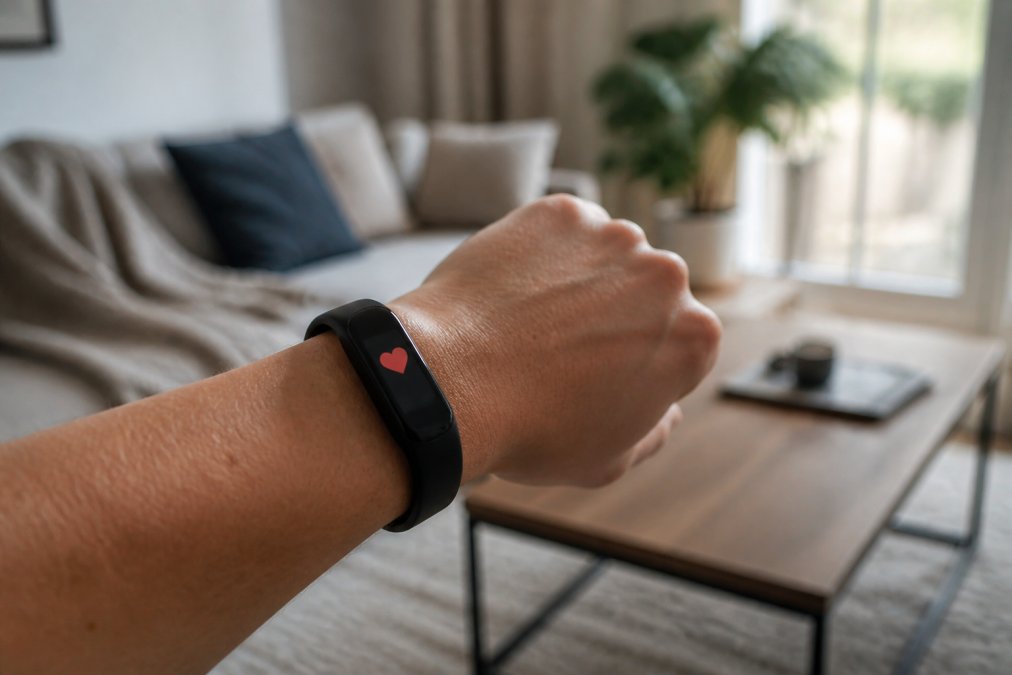
Wearable technology offers a complementary approach to blood testing, providing continuous data rather than a single snapshot. Devices that track heart rate variability, skin temperature, and sleep quality can reveal physiological patterns that correlate with inflammatory activity. A persistently elevated resting heart rate or declining HRV often accompanies systemic inflammation, even before blood markers show significant changes (peer-reviewed research).
The Hume Band 2.0, available through Freedom Fit Fuel at $249, monitors heart rate, skin temperature, physical activity, and sleep quality throughout the day and night. Paired with the Hume Health app, it turns daily readings into a view of your recovery and sleep trends over time, helping you spot patterns that might indicate rising inflammation. Skin temperature trends are particularly useful, since even small sustained increases can signal an inflammatory response.

The Hume Pod smart scale adds another data layer, measuring body fat percentage, muscle mass, and hydration level alongside weight. Body composition changes, particularly increases in body fat percentage, correlate with higher inflammatory activity. Together, a wearable and smart scale give you daily longitudinal data that blood tests alone can't provide.

How to Reduce Systemic Inflammation with Lifestyle Changes
Blood tests tell you where you stand, but lifestyle changes are how you move the needle. The anti-inflammatory diet is the most documented approach, emphasizing whole foods, fatty fish rich in omega-3s, colorful vegetables, and limited processed foods and refined sugar. Many people see meaningful reductions in inflammatory markers within weeks of cleaning up their diet.
Exercise plays a dual role. Regular moderate activity reduces baseline inflammation, but intense training without adequate recovery can increase it temporarily. This is where recovery tools become valuable. Red light therapy panels, like the VitalGlow Core at $650, deliver targeted red and near-infrared light that some research suggests supports cellular repair and reduces oxidative stress. For those with deeper budgets, the VitalGlow Apex full-body panel at $6,250 provides more comprehensive coverage for systemic recovery.

Sleep quality and stress management round out the picture. Poor sleep elevates inflammatory markers within days, and chronic stress keeps cortisol and inflammatory cytokines elevated. Prioritizing seven to nine hours of quality sleep and building stress-reduction practices into your routine are non-negotiable components of reducing systemic inflammation.
Common Tracking Mistakes and How to Avoid Them
The biggest mistake people make with at-home inflammation testing is testing too frequently and misinterpreting normal fluctuations. Inflammatory markers vary day to day based on recent illness, exercise, sleep, and even what you ate. A single elevated reading doesn't mean you have chronic inflammation, and a single normal reading doesn't clear you.
Dietary and supplement interference is another overlooked variable. High-dose supplements like fish oil and curcumin can lower inflammatory markers, which sounds good until you realize you're masking the underlying issue. If you're testing to establish a baseline, document what you're taking and consider whether you want to measure your current state or your state without supplements.
False positives also happen. Recent intense exercise, a mild cold, or even allergies can spike CRP levels temporarily. Wait at least two weeks after any illness or unusually hard workout before testing, and always test at the same time of day under similar conditions.
| Mistake | Why It Happens | Better Approach |
|---|---|---|
| Testing after workouts | Exercise spikes CRP temporarily | Wait 48-72 hours after intense training |
| Ignoring supplement effects | Fish oil and curcumin lower markers | Document all supplements before testing |
| Single reading panic | Daily fluctuation is normal | Track trends over 3-6 months |
| Inconsistent timing | Markers vary by time of day | Test at the same time each session |
Conclusion: Building Your Personal Inflammation Baseline
Tracking inflammation at home is most useful when you treat it as a long-term project rather than a one-time diagnostic. Establish a baseline with an hs-CRP test, repeat it every three to six months, and correlate the numbers with your sleep, training, and lifestyle data from wearables. Over time, you'll learn what raises your markers and what brings them down, giving you personalized insight no single test can provide.
The tools we've covered, from at-home test kits to the Hume Band 2.0 and VitalGlow panels, each serve a distinct role in that process. Blood tests give you the ground truth, wearables fill in the daily picture, and recovery tools help you act on what you learn. For additional context on interpreting lab results, the National Institutes of Health publishes accessible summaries of inflammatory marker research, and the CDC offers guidance on chronic disease prevention through lifestyle modification.
The goal isn't to obsess over a number. It's to build enough awareness of your body's signals that you can make informed decisions about diet, training, and recovery before small problems become large ones.
Frequently Asked Questions
Is there a way to measure inflammation in the body at home?
Yes. You can track inflammation at home using three main methods: at-home blood test kits that measure biomarkers like C-reactive protein (CRP), wearable devices that monitor physiological signs like heart rate variability (HRV) and skin temperature, and consistent tracking of physical symptoms. At-home tests offer a direct snapshot of your inflammatory status, while wearables provide continuous trend data. For the most accurate picture, combine a lab-certified at-home test with daily symptom and activity logging.
What are 5 signs your body has inflammation?
Five common signs of chronic inflammation include: persistent fatigue that rest doesn't fix, unexplained joint or muscle pain and stiffness, frequent digestive issues like bloating, recurring skin problems such as acne or eczema, and brain fog or difficulty concentrating. These differ from acute inflammation, which shows as visible redness, swelling, and heat after an injury. If you notice several of these chronic signs, it may be worth using an at-home test kit to check your CRP levels and discussing the results with a physician.
How do I check my inflammation levels?
The most common way to check inflammation levels is a blood test that measures C-reactive protein (CRP). A high-sensitivity CRP (hs-CRP) test is more sensitive for detecting low levels of chronic inflammation. You can order a CLIA-certified at-home test kit, which requires a simple finger-prick blood spot sample that you mail to a lab. For continuous tracking, wearable devices that monitor skin temperature and heart rate variability can help identify trends between blood tests.
Can wearable devices accurately track inflammation markers?
Wearables cannot directly measure inflammatory biomarkers like CRP in your blood. However, they can track physiological indicators that often correlate with inflammation. Elevated resting heart rate, decreased heart rate variability (HRV), and higher skin temperature can signal that your body is under stress or recovering from an inflammatory response. Devices like the Hume Band 2.0 are useful for spotting these trends over time, but they work best as a complement to, not a replacement for, at-home blood test kits.
Starting your inflammation tracking journey doesn't require a medical degree or a lab in your garage. It requires the right tools and a commitment to consistency. Freedom Fit Fuel carries the recovery equipment and health monitoring devices that make home-based tracking practical, from the Hume wearable system to red light therapy panels, all with direct pricing and expert support available by phone. Get started with Freedom Fit Fuel and build the data-driven recovery routine your body deserves.