

The Mindful Buyer’s Guide to Squat Racks: Anchoring Your Home Sanctuary
Why does every high-performance squat rack look like it was salvaged from a decommissioned shipyard? You've spent months curating a home sanctuary that breathes with intentionality, only to realize your strength goals require a massive hunk of steel that might just disrupt your recovery. It's a common dilemma; you need the heavy-duty security of a professional gym, but you aren't exactly looking to turn your peaceful multi-use room into a gritty, clanging warehouse.
We agree that nothing kills a morning flow faster than the terrifying "wobble" of a cheap, thin-walled frame. You deserve a foundation that feels permanent, safe, and restorative. This guide will help you navigate the technical maze of 11-gauge steel and pin sizes to find a squat rack that balances elite performance with your home’s tranquility. We’ll explore how to maximize your floor plan, decode the durability of premium materials, and select the essential attachments that turn a simple frame into a complete wellness anchor for your daily evolution.
Key Takeaways
- Understand why a professional-grade squat rack serves as the essential "anchor" for your home wellness sanctuary, providing far more stability than a pair of lonely dumbbells.
- Master the technical jargon of steel gauges and pin sizes to ensure your frame remains rock-solid and compatible with premium attachments.
- Navigate the space-saving dilemma by choosing between folding racks for multi-use rooms or power cages for your dedicated fortress of solitude.
- Identify the "unsung hero" attachments, like J-cups and pull-up bars, that protect your equipment while offering vital space for vertical decompression.
- Discover how to integrate heavy lifting with restorative recovery tools, like infrared saunas, to complete a balanced and intentional stress-adaptation loop.
The Philosophy of the Rack: Why Your Sanctuary Needs an Anchor
A home sanctuary requires a focal point. Not a flickering candle or a plush velvet cushion, but a structural anchor that demands presence, rewards effort, and builds discipline. A professional-grade squat rack serves as this foundation. It transforms a spare room from a simple storage closet into a temple of personal evolution, providing the literal and metaphorical framework for your daily growth. Without this anchor, a wellness room often feels untethered, lacking the gravitational pull that keeps your routine from drifting away during stressful weeks.
Relying solely on a pair of dusty five-pound dumbbells for your fitness journey is the lifestyle equivalent of drinking lukewarm tea. It's technically a beverage, but it lacks the heat, the depth, and the transformative power of a truly bold brew. Real strength requires resistance that challenges your spirit and forces you to adapt. We should retire the tired myth that heavy frames are exclusively for "meatheads" looking to grunt in a mirror. In reality, the rack is a vital tool for longevity, bone density, and functional power that allows you to move through life with grace.
Think of lifting as a form of moving meditation. Step inside the frame. When you do, the external noise of the world begins to fade. Every deliberate rep becomes an act of intentionality, restoration, and focus. You aren't just moving weight; you're anchoring your mind and strengthening your resolve.
Breaking the 'Laundry Rack' Cycle
We've all seen those flimsy racks made from recycled soda cans. They eventually succumb to their true destiny: becoming an overpriced place to hang wet towels. Investing in low-quality gear is a recipe for a mid-workout existential crisis. You shouldn't wonder if that creaking sound is your knees or the frame. A professional-grade squat rack offers a psychological shift, transforming your environment into a space that respects your time, your effort, and your potential.
Strength as the Foundation of Restoration
Wellness thrives on the balance between exertion and ease. Heavy lifting creates the stimulus that your recovery tools then optimize. It primes the nervous system, flushes the tissues, and earns you the right to relax. At Freedom Fit Fuel, we value the triadic approach of Strength, Recovery, and Freedom. This holistic view defines our about-us story. Anchor your space with a rack to create the active pole of your wellness circuit.
Decoding the Steel: Gauges, Pin Sizes, and Why Your Rack Shouldn't Jiggle
Choosing a squat rack shouldn't feel like a high-stakes engineering exam, yet the industry insists on using technical jargon that feels intentionally confusing. When you're building a sanctuary, you want equipment that feels like a permanent part of the architecture, not a temporary fixture that shudders every time you re-rack the bar. The "Wobble Test" is your first line of defense; if the frame sways when you give it a firm shove, it’s a liability that will haunt your focus during heavy sets. A sturdy rack should feel like it's part of the foundation, providing a silent, reliable partner in your personal growth.
11-Gauge vs. 14-Gauge: A Tale of Two Steels
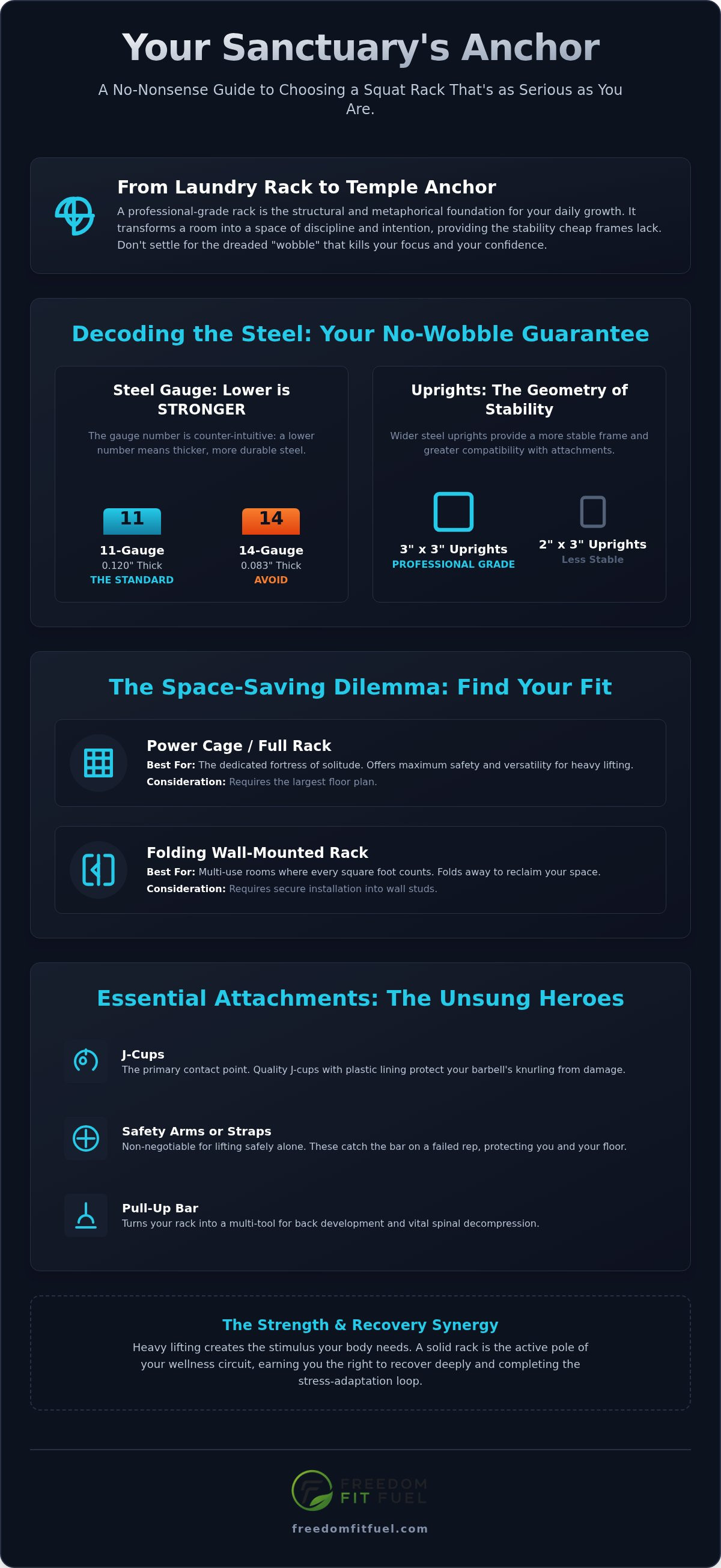
Steel gauge numbers operate on a reverse logic that makes most people's heads spin. Because logic is hard, a higher number actually indicates thinner steel. While 14-gauge might be fine for a cheap department store shelf, it has no business supporting your body weight during a heavy lift. 11-gauge steel is the 0.120-inch thick industry standard for heavy-duty residential racks. It provides the density required for true peace of mind and long-term durability. Investing in this professional-grade thickness ensures your sanctuary remains a place of safety rather than a source of anxiety.
The Geometry of Stability
The footprint of your rack is just as vital as the metal itself. A wide, deep base creates a stable center of gravity that prevents tipping during explosive movements. You also need to consider your "no-holes-in-the-floor" lifestyle. Some high-end frames require bolting to the concrete for maximum security, while others use a massive, heavy base to remain freestanding. Understanding the weight rack vs squat rack distinctions will help you decide which structural foundation aligns with your room's layout and your commitment to your flooring.
Beyond the gauge, pay attention to the upright dimensions and pin sizes. We recommend 3x3 steel uprights because they offer a larger surface area for attachments and a more commanding, aesthetically pleasing presence in your room. Pin sizes, typically 5/8 inch or 1 inch, determine which accessories you can add later. Most professional-grade attachments favor the 1-inch standard for maximum shear strength and stability. If you want a setup that evolves with you, choosing a frame with these robust specs is the smartest path forward. You can explore our curated squat rack options designed to anchor your home gym with both power and poise.
The Space-Saving Dilemma: Folding, Wall-Mounted, or Power Cage?
Space is often the final frontier of the home wellness journey. While we might dream of a sprawling, light-filled garage gym, the reality often involves a spare bedroom, a corner of the basement, or a shared office space. Choosing a squat rack that respects your floor plan is an act of intentionality. You shouldn't have to choose between a heavy-duty workout and the ability to walk through your own home without bruising a shin. The right frame should fit your life, providing a stable anchor without overwhelming the tranquility of your surroundings.
Folding racks act as a functional magic trick for the multi-use room. With a simple "now you see it, now you don't" mechanism, these units tuck away against the wall when your session ends. They're perfect for those who value a clean, uncluttered aesthetic. If you prefer a permanent fixture but have limited depth, half racks provide a sophisticated middle ground. They offer a smaller footprint than a full cage while maintaining the safety features and attachment compatibility you need for a professional-grade experience.
Before you commit to any design, beware of the "Ceiling Height" trap. It's a quiet heartbreaker to unbox a beautiful 90-inch upright only to realize your basement ceiling is 88 inches high. Measure twice, breathe deeply, and ensure you have enough clearance for pull-ups at the top of the frame. Your sanctuary should feel expansive, not cramped.
Wall-Mounted Wonders
Wall-mounted racks are the "Pilates Reformer" of the lifting world. They are sleek, efficient, and deeply intentional. These units require a solid wall and a bit of DIY spirit to install, but the payoff is a rock-solid station that leaves your floor space mostly untouched. They're the ideal choice for lifters who have a "fear of commitment" regarding bulky floor equipment but still want a professional-grade squat rack. Just ensure your studs are ready for the responsibility; your home's structure is the ultimate partner in this lifting relationship.
The Power Cage: Total Immersion
The power cage is the ultimate fortress of solitude for those with a dedicated gym space. It is the safest option for solo lifters, primarily because your ego shouldn't be your only spotter during a heavy set. With four uprights, you gain unparalleled versatility for attachments, band pegs, and safety straps. You can make a cage feel aspirational rather than claustrophobic through smart placement. Position it near a window or under soft lighting to maintain that sense of order while you push your physical limits.
Essential Attachments: Turning Your Rack into a Multi-Tool
A bare squat rack is essentially a beautiful, industrial skeleton. To breathe life into your home sanctuary, you must curate the attachments that transform this frame into a versatile multi-tool. Unlike commercial warehouses that clutter their floors with fifty different machines, your goal is to maintain a sense of order. You want a single, powerful station that respects your space while expanding your capabilities. By selecting a few high-quality accessories, you turn a simple frame into a complete ecosystem for strength and restoration.
- J-Cups: These are the unsung heroes that cradle your barbell. High-quality cups with plastic liners protect the knurling of your bar and your sanity by eliminating that jarring metal-on-metal screech.
- Pull-Up Bars: Most frames include these as a standard crossmember. They provide a vital station for vertical decompression, allowing you to stretch your spine and find your center after a heavy session.
- Spotter Arms: These serve as your essential safety net. We've all had that moment where "one more rep" was an ambitious lie; spotter arms ensure that a failed set remains a quiet lesson rather than a loud disaster.
- Landmines and Dip Stations: These add incredible variety without adding clutter. They allow for rotational movements and chest work while tucking away neatly when the work is done.
The 'Must-Haves' vs. The 'Maybe-Laters'
Start with the essentials to avoid turning your sanctuary into a storage unit for unused metal. The non-negotiable duo for any intentional lifter is a set of premium J-cups and high-quality Weights. Along with spotter arms, these three form the foundation of a safe, effective practice. Avoid the siren call of flashy, "gimmick" attachments that promise to revolutionize your physique while simultaneously making you breakfast. They usually just gather dust and mock your floor plan. Focus on pieces that offer genuine utility and long-term value.
Aesthetics and Organization
A chaotic environment leads to a chaotic mind. Use weight horns and integrated bar storage to keep your plates off the floor and your focus on the movement. This organization reinforces the concept of "Elegant Lifting," where even the heaviest sets are performed with grace, poise, and control. A clean squat rack reflects a focused mind, turning your workout into a seamless transition from effort to restoration. By keeping your space organized, you ensure that your home remains a place of renewal rather than a cluttered obstacle course.
Ready to build your foundation? Explore our collection of professional-grade exercise equipment to find the perfect anchor for your home wellness space.
The Strength and Recovery Synergy: Beyond the Squat
The work you do within the frame of a squat rack is only half the story. To truly honor your body's potential, you must view strength as the intentional spark that ignites your recovery. Lifting creates the micro-tears and nervous system stress required for change. This is the "Stress" phase of the Stress-Adaptation-Recovery loop. Without the follow-through, you are just tired. When you integrate your lifting practice with restorative tools, you move from simply working out to truly evolving. Exert, restore, and evolve; this is the rhythm of a high-performance life.
A heavy session is the perfect "pre-game" for a session in a 2-Person Low EMF FAR Infrared Sauna. The infrared heat penetrates deep into the muscle tissues you just challenged, flushing out metabolic waste and soothing the central nervous system. At Freedom Fit Fuel, we position ourselves as your partner in both the "Push" and the "Recharge." We believe that a home sanctuary should provide the tools for both peak exertion and profound stillness. By building a space that supports your highest self, you create a sustainable path toward long-term vitality.
The Post-Rack Wind-Down
Once you rack the bar for the final time, the real magic begins. Recovery is where the actual "gains" happen; science, it's a thing. Step out of the frame and transition into a flow that prioritizes restoration. Many mindful buyers find that moving from the squat rack directly to a cold plunge tub creates a powerful contrast therapy effect that reduces inflammation and clears the mind. You might also integrate red light therapy or PEMF mats to signal to your body that the work is done and the healing has begun. This transition should feel seamless, intentional, and rewarding.
Your Journey to Freedom
Investing in professional-grade equipment is a profound vote for your future health. It is a commitment to a version of yourself that is stronger, more resilient, and deeply centered. Every time you step into your sanctuary, you are reinforcing the habits that define your daily evolution. Quality gear provides the stability, safety, and peace of mind necessary to push your limits without fear. Choose the equipment that reflects your values and respects your home's tranquility. Just remember that a sturdy, 11-gauge frame is the only thing standing between you and a very awkward, expensive conversation with your floor. Build it right, build it once, and enjoy the freedom that comes with a truly anchored life.
Anchor Your Evolution with Intentional Strength
Choosing the right frame isn't just about the metal; it's about creating a space where your physical effort meets your internal calm. You now understand that 11-gauge steel is the non-negotiable standard for a secure home gym. You've seen how smart designs can respect your floor plan without sacrificing the heavy-duty performance you deserve. By anchoring your wellness space with a professional-grade squat rack, you bridge the gap between peak exertion and deep restoration.
At Freedom Fit Fuel, we curate strength gear specifically for the mindful athlete who values both power and poise. We offer national shipping across the USA, ensuring that your path to a more balanced life is as smooth as your recovery flow. It's time to invest in a foundation that supports your highest self and respects your sanctuary. Don't let a wobbly frame be the weak link in your daily evolution.
Build Your Home Sanctuary with Freedom Fit Fuel Strength Gear
Your journey toward a more confident and grounded version of yourself starts with the right foundation. Breathe deep, lift heavy, and enjoy the freedom of a truly anchored life.
Frequently Asked Questions
Is a squat rack really necessary for a home gym?
A squat rack is the essential foundation for anyone serious about compound movements and long-term safety. While you can technically lift dumbbells until you're blue in the face, you'll eventually hit a plateau that only heavy, anchored resistance can break. It provides the structural security needed to push your limits without turning your living room into a hazardous obstacle course. Think of it as the literal backbone of your sanctuary's strength practice.
Do I need to bolt my squat rack to the floor?
Bolting is recommended for maximum security, but it isn't always mandatory if you choose a frame with an extended base. High-quality freestanding units use their own weight and geometry to remain stable during standard lifts. However, if you plan on performing dynamic movements or using heavy pull-up attachments, those floor bolts provide the peace of mind that your sanctuary won't suddenly decide to tip over mid-set. Safety is the ultimate luxury.
What is the difference between a squat rack and a power cage?
The primary difference lies in the number of uprights and the level of enclosure. A power cage features four uprights, creating a box that you step inside for total safety. A standard squat rack or half-rack typically has two main uprights, offering a smaller footprint and an open feel. Cages provide superior safety for solo lifting, while racks are perfect for those prioritizing space and a less claustrophobic aesthetic.
Can I use a squat rack in an apartment with low ceilings?
You can definitely find models designed specifically for height-challenged spaces. Many professional manufacturers offer "shorty" versions of their frames that stand around 72 to 80 inches tall. Folding wall-mounted units are also a fantastic option for apartment dwellers who need to reclaim their floor space once the session ends. Just remember to measure your ceiling twice; scraping the popcorn finish off with your head during a pull-up is rarely restorative.
What gauge steel is best for a home squat rack?
11-gauge steel is the gold standard choice for a serious home setup. As we discussed earlier, lower numbers indicate thicker metal, and 11-gauge provides the 0.120-inch thickness required for commercial-level durability. Avoid 14-gauge or higher unless you're looking for a very expensive laundry hanger. Thicker steel ensures that your squat rack remains a stable, lifelong partner in your wellness journey rather than a shaky, jiggling liability that haunts your workouts.
How much space do I need around my squat rack for safety?
You should aim for at least two to three feet of clear space around the perimeter of your frame. This clearance allows you to load plates onto the barbell without performing a delicate dance around your furniture. You also need enough room to safely bail on a lift if things go sideways. A cramped sanctuary is a stressful sanctuary, so give your equipment the breathing room it needs to function properly and maintain your flow.
What are the first attachments I should buy for my rack?
Your first investments should always be high-quality J-cups and a reliable pair of spotter arms. These are the fundamental tools that protect your barbell and your physical safety. Once those are secured, consider a pull-up bar for vertical decompression or a landmine attachment for rotational work. Avoid the temptation to buy every shiny gadget at once; let your needs dictate your attachments as your strength practice evolves and matures over time.
Is it safe to squat alone in a home gym without a spotter?
It is perfectly safe to lift alone as long as you utilize mechanical spotters like safety arms or heavy-duty straps. These tools are designed to catch the weight so you don't have to rely on a human spotter who might be distracted by their phone. Set your safeties just below your natural squat depth. This simple precaution ensures that a failed rep is merely a quiet moment of learning rather than an emergency.