

Wood Fired Hot Tub vs Electric: Choosing Your Ritual Without Losing Your Mind
What if the most advanced wellness tool in your garden wasn't a complex circuit board, but a simple pile of seasoned birch and a single match? We've all been there, staring at a generic plastic spa and wondering if the chemical scent and the hum of a jet-powered motor are actually helping us unwind. Choosing between a wood fired hot tub vs electric isn't just a technical decision; it's a choice about how you want to inhabit your time. You deserve a space that allows you to breathe, reflect, and restore without the frantic spin of an electric meter or the persistent itch of chlorine-heavy water.
It's true that "set and forget" convenience is tempting when life feels like a sprint. However, the hidden costs of high utility bills and a sterile soak can quickly sour the experience. Over a 10-year period, the cost difference can reach $10,000 or more. This guide provides a witty, professional breakdown of these worlds so you can choose your ritual with clarity. We will compare long-term operating costs, sensory benefits of a zero-jet design, and how the Wood Fired 4-Person to 5-Person 0-Jet Hot Tub can transform your recovery routine into a meaningful sanctuary.
Key Takeaways
- Decide if you want a soul-soothing ritual or just another appliance by weighing the sensory and lifestyle differences of a wood fired hot tub vs electric.
- Stop donating your hard-earned cash to the utility company and learn how a fire-powered system can save you upwards of $10,000 in long-term energy costs.
- Say goodbye to the "chemistry degree" requirement of traditional spas by embracing a natural, jet-free approach to water maintenance that respects your skin.
- Master the art of the perfect soak with the Wood Fired 4-Person to 5-Person 0-Jet Hot Tub, specifically designed for silent recovery and deep, mindful connection.
- Learn how to anchor a complete home wellness sanctuary by integrating contrast therapy rituals that pair primal heat with intentional cold exposure.
The Fundamental Vibe Check: Wood Fired vs. Electric
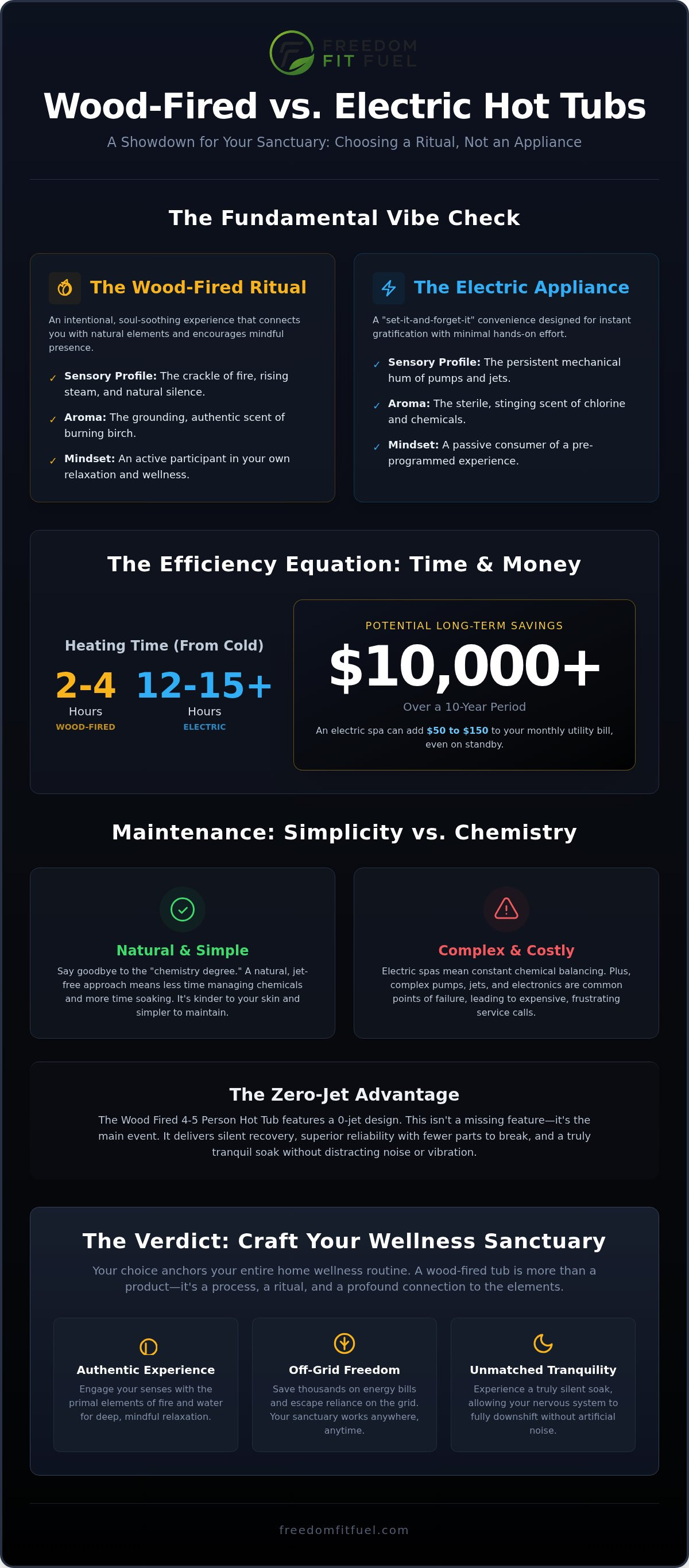
The debate between a wood fired hot tub vs electric isn't just about how you heat your water; it's about how you value your time. If you look at the history and types of hot tubs, you'll see a clear shift from communal, fire-heated baths to the modern, grid-dependent boxes we see today. One is a primal, chemical-free sanctuary that asks for your attention. The other is a set-it-and-forget-it appliance that lives quietly on your electric bill. Let's be honest: one is a rewarding hobby, and the other is basically a giant, outdoor dishwasher you can sit in. Choosing the right one depends on whether you view relaxation as a destination or a ritual.
Intentional living starts with the choices we make for our recovery spaces. When you choose a wood-fired path, you're opting for a deeper connection to the natural elements. You're choosing a space that feels curated, authentic, and restorative. It's about moving away from the plastic, generic look of traditional spas and toward something that feels like a natural extension of your home. This choice empowers you to take control of your environment, moving from a passive consumer to an active participant in your own well-being.
The Sensory Experience: Fire, Steam, and Silence
Electric spas are often defined by the constant, mechanical hum of a circulating pump. It's the sound of a refrigerator that followed you into the garden. In contrast, a wood-fired experience is defined by silence, restoration, and presence. Because the Wood Fired 4-Person to 5-Person 0-Jet Hot Tub prioritizes a zero-jet design, there's no motor to drown out the wind in the trees or the local birds. You trade the artificial, stinging scent of a public swimming pool for the grounding aroma of burning birch. This sensory shift allows your nervous system to truly downshift, providing a level of tranquility that a vibrating plastic tub simply can't match.
The Convenience Factor: Instant Gratification vs. The Slow Burn
If it's 4 PM on a rainy Tuesday and you need an immediate escape, the electric tub is your best friend. It's always there, humming at 38°C, waiting for your spontaneous whim. It offers instant gratification for the busy professional who doesn't want to think. But there's a specific kind of magic in the "slow burn" of a wood-fired system. It requires a ritual start time. You light the fire, stoke the embers, and perhaps enjoy a cold drink while the water warms over a few hours. When weighing a wood fired hot tub vs electric, consider if you're a spontaneous soaker or a ritualistic planner who finds peace in the process.
The Efficiency Equation: Heating Times and Energy Bills
Heating 300+ gallons of water is a significant feat of engineering. Whether you use a submerged firebox or a high-voltage element, the physics remains the same: you're moving a massive amount of energy into a liquid environment. While an electric tub might take 12 to 15 hours for an initial warm-up, a wood fired hot tub vs electric comparison shows that fire is simply more efficient at the point of contact. A well-designed wood-fired unit can reach soaking temperature in just 2 to 4 hours. Sure, firewood isn't exactly free, but it also doesn't send you a passive-aggressive monthly invoice for "standby power" while you're away on vacation.
Heating Mechanics: Firebox vs. Heating Element
Internal fireboxes are designed to maximize surface area, transferring heat directly into the water with minimal loss. This is why they often outperform electric heaters, especially the 110v "plug-and-play" models that struggle to raise the temperature by more than a degree or two per hour. Even 220v systems are limited by the capacity of your home's breaker panel and the efficiency of the heating coil. Thermal inertia is the tendency of a large body of water to resist changes in temperature, meaning your wood-fired tub stays pleasantly warm for that quiet morning-after soak long after the embers have died. It's a natural way to hold onto the heat you worked for.
Operating Costs: Firewood vs. The Grid
Keeping an electric spa at a constant 102 degrees can add $50 to $150 to your monthly bill, depending on local rates and insulation. Over a decade, that's a $10,000 conversation you'll have with your bank account. Wood-fired models offer a distinct "off-grid" advantage; they don't care if the power lines are down or if your cabin is three miles from the nearest transformer. Because the Wood Fired 4-Person to 5-Person 0-Jet Hot Tub lacks complex pumps and electronic sensors, your long-term repair budget stays focused on relaxation rather than service calls. Even when following CDC guidelines for hot tub maintenance, the simplicity of a jet-free design means fewer moving parts to fail in the middle of winter. You trade the complexity of the grid for the reliability of the flame, empowering you to own your recovery space without the burden of recurring utility fees.
Maintenance and Chemical Warfare: Keeping It Clean
Maintaining an electric hot tub often feels like you're studying for a surprise chemistry exam you never signed up for. You're constantly balancing pH levels, alkalinity, and shock treatments just to keep the water from turning into a science project. In the wood fired hot tub vs electric comparison, the maintenance philosophy is refreshingly different. Because wood-fired units don't rely on stagnant water kept warm for weeks, many owners embrace the "fill and drain" method. You get fresh, crisp water for every weekend session without the persistent scent of a bleach factory clinging to your skin. It's a choice between managing a liquid laboratory or simply enjoying a bath.
The absence of internal plumbing is a quiet revolution for hygiene. In a standard spa, the hidden pipes behind those jets are breeding grounds for biofilm and bacteria that you can't see or reach. The Wood Fired 4-Person to 5-Person 0-Jet Hot Tub eliminates this concern entirely. With no pipes to clog or contaminate, the cleaning process is as simple as a quick wipe-down between fills. This makes it the superior choice for those with sensitive skin or a general aversion to bathing in a cocktail of industrial sanitizers. You can add a filter if you wish, but when the water is this easy to refresh, you might find you don't actually need one.
Water Treatment: Chlorine vs. Natural
If you prefer to keep your water for longer than a few days, you'll still need a sanitation plan. However, wood-fired tubs allow for much gentler options. Because you aren't fighting the constant bacterial growth spurred by 24/7 heating, you can often use minimal natural enzymes or oxygen-based cleaners. A high-quality cover is your best friend here. It keeps debris out and heat in, ensuring your next soak is as pristine as the last. This approach empowers you to curate a wellness space that respects your body's largest organ: your skin.
The Longevity Factor: Wood vs. Acrylic
Longevity is where the "appliance" versus "investment" distinction becomes undeniable. An acrylic shell eventually succumbs to UV rays, developing cracks and fading over time. When a proprietary circuit board in an electric tub fries, you're at the mercy of a technician's schedule and a hefty invoice. High-quality wood and metal components are built for the long haul. They're repairable, resilient, and age with a grace that plastic simply can't replicate. When considering a wood fired hot tub vs electric, remember that wood and metal can be restored; plastic can only be replaced. Yes, you'll have to scoop out some ash occasionally, but that's a small price for a sanctuary that won't end up in a landfill in a decade.
The Contrast Therapy Ritual: Why Recovery Needs Heat
Contrast therapy is the "fire and ice" dance that transforms a simple soak into a biological reset. When you compare a wood fired hot tub vs electric, the former acts as a grounded, natural anchor for this ritual. By alternating between the intense heat of the tub and the sharp bite of a cold plunge, you're engaging in a deliberate practice of vasodilation and vasoconstriction. Heat expands your blood vessels, flooding your muscles with oxygen; cold then forces them to constrict, flushing out metabolic waste. It's a manual pump for your lymphatic system that leaves you feeling invigorated, restored, and remarkably clear-headed. You can learn how to do contrast therapy at home to master this cycle and reclaim your vitality.
Designing Your Home Wellness Sanctuary
Aesthetics matter when you're trying to escape the digital noise of modern life. A wood-fired unit looks like a piece of functional art, whereas a plastic electric spa often looks like a misplaced household appliance. When you design your space, consider how the natural materials of the tub complement a sauna or a cold plunge. Position your tub to capture the best sunset or forest view, ensuring you're far enough from the house to feel truly "away." The psychological benefit of an "unplugged" recovery session is immense. Without the persistent hum of electric pumps or the artificial glow of LED control panels, your brain finally gets the memo that it's time to downshift and wind down.
Recovery for the Whole Family
True restoration doesn't have to be a solo endeavor. The 4-5 person capacity of the Wood Fired 4-Person to 5-Person 0-Jet Hot Tub allows for social recovery, turning a health habit into a shared family connection. Because this is a 0-jet design, it's inherently safer and more relaxing for children. There are no powerful suction points to worry about and no mechanical roar to startle sensitive ears. It's just quiet, still water heated by a crackling fire. This intentionality creates a space where genuine conversations happen, away from screens and the frantic pace of the grid. If you're ready to build this anchor in your own backyard, explore the complete wellness collection at Freedom Fit Fuel and start your journey toward a more balanced life.
Decision Time: Which Hot Tub Should You Buy?
Choosing between a wood fired hot tub vs electric comes down to a fundamental question: do you want an appliance or an experience? If you've made it this far, you likely realize that the plastic, humming box from a local spa dealer doesn't quite fit the vision of your backyard sanctuary. You want something that restores your body without depleting your bank account or irritating your skin. This "Checklist of Truth" will help you decide if you're ready to embrace the flame or if you should stay tethered to the grid. Ask yourself these three questions before you commit:
- Do you have a neighbor who calls the authorities if they smell a toasted marshmallow?
- Is your idea of "hard work" lighting a single match and waiting two hours?
- Do you prefer the scent of wood smoke or the sharp, stinging aroma of a municipal swimming pool?
When you weigh a wood fired hot tub vs electric, you're deciding how much control you want over your environment. One offers the convenience of a microwave; the other offers the soul-satisfying depth of a slow-cooked meal. Both will get you warm, but only one will make you feel truly human again.
Buy Wood-Fired If...
You should choose the fire if you value a chemical-free soak and have access to seasoned hardwood. It's for the person who wants their garden to feature a piece of functional art rather than a giant piece of Tupperware. Most importantly, it's for those who find peace in the process. There is a profound psychological satisfaction in "earning" your soak by building the fire yourself. It turns a simple bath into a mindful ritual that forces you to slow down and breathe.
Buy Electric If...
Stay with the grid if you live in a high-density urban area with strict smoke ordinances. If your neighbors are the type to alert the fire department at the first sign of a campfire, the wood-fired life might bring more stress than relaxation. Electric is also the right call if your idea of "work" is clicking a remote control or if your recovery ritual is strictly limited to a ten-minute dip before your morning commute. It's about convenience over connection.
The Freedom Fit Fuel Promise
At Freedom Fit Fuel, we don't just sell equipment; we curate paths to restoration for people who give a damn about their health. Our Wood Fired 4-Person to 5-Person 0-Jet Hot Tub is designed to be the heart of your wellness sanctuary. We believe that recovery should be intentional, silent, and sustainable. You can learn more about Freedom Fit Fuel and our commitment to holistic self-care. We invite you to explore our Wood Fired Hot Tub collection and decide which ritual fits your life. If you hate the idea of fire, buy a heated blanket; if you love the idea of true restoration, it's time to choose the tub.
Embrace the Ritual and Reclaim Your Restoration
Choosing between a wood fired hot tub vs electric is ultimately a decision about how you want to inhabit your evenings. You can opt for the sterile convenience of a grid-dependent appliance; or you can embrace a ritual that engages your senses and respects your body. We've explored how the "fill and drain" philosophy saves you from a chemical-heavy existence and how the silent, zero-jet design allows for actual mental clarity. By choosing fire over a circuit board, you're not just heating water. You're curating a sanctuary for intentional recovery.
The long-term savings of avoiding high utility bills are a perk, but the real value lies in the connection you'll build with your environment. It's time to move away from the plastic hum and toward the crackle of a sustainable soak. Your recovery space should reflect your commitment to a balanced life.
Upgrade your recovery ritual with the Wood Fired 4-Person to 5-Person Hot Tub and experience a sustainable, chemical-free soak designed for ultimate peace. This unit is perfect for 4-5 person gatherings, offering a jet-free experience that prioritizes your tranquility. Step away from the grid today.
Frequently Asked Questions
How long does a wood-fired hot tub take to heat up?
A Wood Fired 4-Person to 5-Person 0-Jet Hot Tub typically takes 2 to 4 hours to reach an ideal soaking temperature of 38°C. This duration depends on the starting temperature of your water and the quality of your firewood. Unlike electric heaters that struggle to gain a few degrees per hour, fire provides a rapid and efficient heat transfer. It's a deliberate process that rewards your patience with a deeply restorative, natural warmth that lasts long after the embers fade.
Can I use a wood-fired hot tub in the winter without it freezing?
You can absolutely enjoy your tub in the winter; in fact, it is the best time for a soak. However, you must prevent the water from freezing to protect the structure. If you aren't planning to use it for several days, it's best to drain the water completely. For regular use, keeping a low fire or using an insulated cover helps maintain thermal mass. It requires more attention than a grid-connected appliance, but the experience is far more magical.
Do I need a permit for a wood-burning hot tub?
Permit requirements vary significantly depending on your specific location and local council regulations. In many rural areas, these tubs are treated similarly to a backyard fire pit or a charcoal grill. However, some high-density urban zones have strict smoke control ordinances that might restrict wood-burning appliances. It's always a smart move to check your local bylaws regarding recreational fires before you install your new sanctuary. This ensures your relaxation remains entirely stress-free and legally compliant.
How often do I need to change the water in a wood-fired tub?
If you choose the chemical-free "fill and drain" method, you should change the water every one to three days. This keeps your soak fresh and hygienic without the need for industrial sanitizers. If you decide to use a filtration system and mild, skin-friendly enzymes, you can extend the water life to several months. The choice depends on whether you prefer the crispness of fresh water or the convenience of a long-term, treated setup for your recovery ritual.
Is a wood-fired hot tub more expensive to run than electric?
A wood-fired model is significantly cheaper to operate than an electric one over the long term. While an electric tub can add $150 to your monthly bill, firewood for a full season often costs less than two months of electricity. When comparing a wood fired hot tub vs electric, the lack of recurring utility fees is a major advantage. You trade a small amount of manual effort for thousands of dollars in savings over the lifespan of the unit.
What kind of wood is best for heating a hot tub?
Seasoned hardwoods like birch, ash, or oak are the gold standard for heating your water efficiently. These woods burn hotter and longer, providing a consistent heat source without excessive smoke. You should avoid using softwoods like pine, as they produce too much soot and creosote, which can clog your chimney. Never use treated or painted wood, as these release toxic chemicals. Using high-quality, dry wood ensures your path to restoration is clean, fragrant, and incredibly effective.
Can I add a cold plunge to my hot tub setup for contrast therapy?
You can and definitely should add a cold plunge to your setup to Get the full power of contrast therapy. Pairing your hot tub with a cold plunge allows you to master the "Fire and Ice" method, which is excellent for reducing inflammation and boosting circulation. Freedom Fit Fuel offers dedicated cold plunges specifically designed to complement your wood-fired sanctuary. This combination creates a professional-grade recovery station in your own garden, empowering you to take complete control of your wellness journey.
Are wood-fired hot tubs smokey?
They are only smokey during the initial lighting phase when the firebox is still warming up. Once the fire reaches its optimal operating temperature and achieves secondary combustion, the smoke becomes nearly invisible. Using dry, seasoned wood is the secret to a clean burn that won't annoy your neighbors. It's a much more pleasant experience than the persistent, artificial smell of chlorine. You get the authentic aroma of a campfire without the cloud of heavy, lingering smoke.